Mexican Butterwort Winter Care in Ireland: Reading the Succulent Rosette
Many Mexican butterworts exchange their broad sticky leaves for a compact succulent rosette in the darker months. Learn how to recognise that change, adjust water carefully and avoid treating every Pinguicula like a bog plant.
By Bog & Bite · Published 12 October 2026
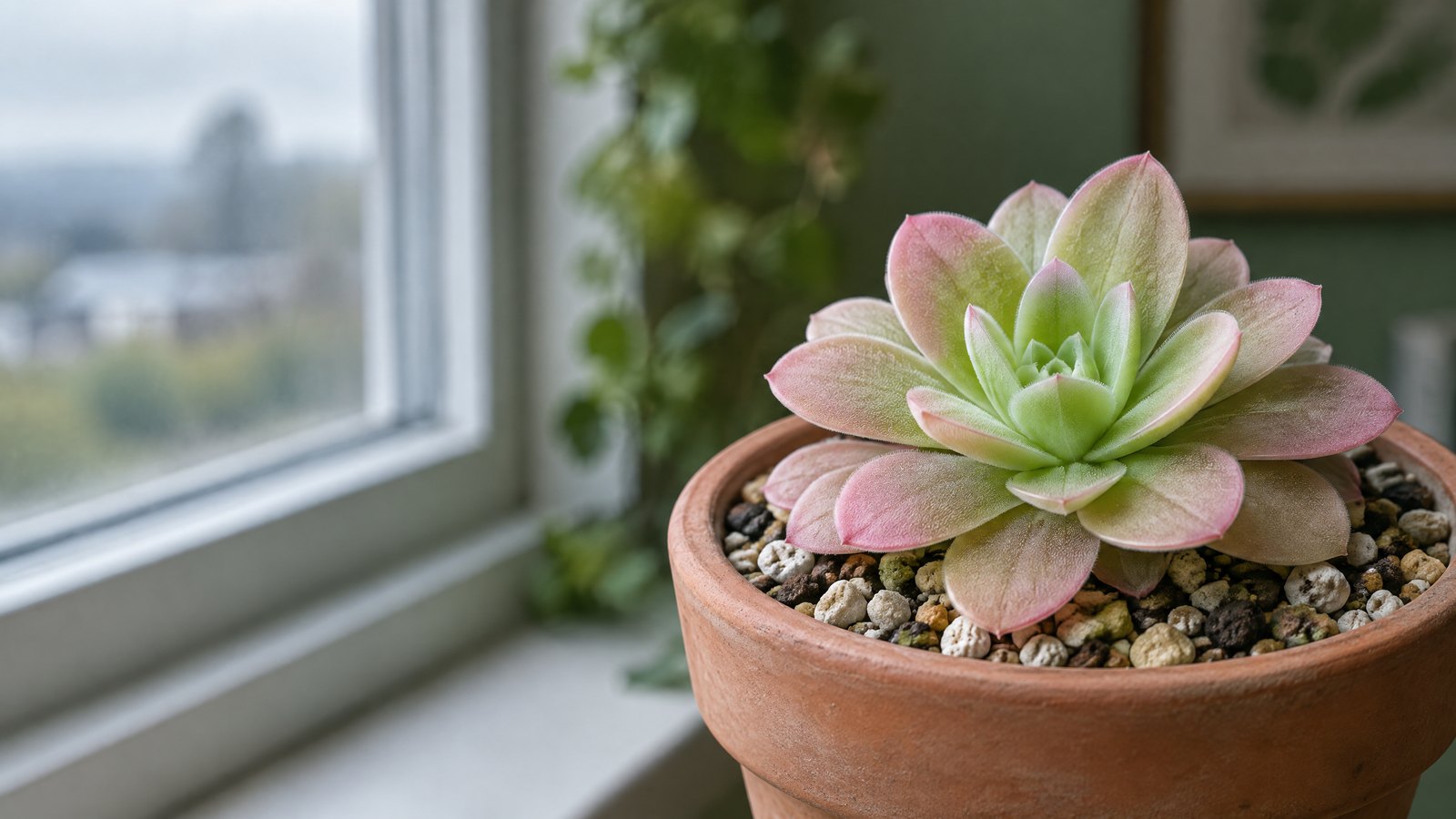
A Mexican butterwort can look as though it has become a different plant in an Irish autumn or winter. The broad, sticky leaves that caught small flies during active growth may give way to a tight rosette of shorter, firmer leaves with no obvious mucilage. For many Mexican Pinguicula, that is a normal seasonal shift rather than an automatic sign of decline.
The important word is many. Pinguicula is a broad genus, and a care routine for one group can be actively unhelpful for another. Mexican windowsill butterworts, warm-temperate species and cold-temperate species do not share one winter recipe. Before changing the watering routine, identify the plant as closely as you can and pay attention to the leaf form it is actually making.
This guide focuses on commonly cultivated Mexican Pinguicula and their compact succulent phase. It does not replace the separate care needs of Irish native or other cold-temperate butterworts, which may form a hibernaculum and need cool, wet winter conditions. For an overview of the differences, begin with Butterworts: a guide for Ireland.
What a succulent rosette is — and what it is not
Many Mexican butterworts are heterophyllous: they produce one kind of leaf in active growth and another during the dry-season phase. The active leaves are usually larger, thinner and visibly sticky because they are carnivorous. The compact leaves are more succulent, smaller and not designed for prey capture. The International Carnivorous Plant Society (ICPS) describes this as a common pattern in Mexican species, while also noting meaningful variation among species and hybrids.
The word “dormancy” is often used casually for this period, but it can hide an important distinction. A compact succulent rosette is not simply a dead-looking plant that should be ignored. It is a living seasonal form with a different relationship to water and light. The plant may be smaller, slower and less showy, but a firm centre and intact leaves are useful signs to observe.
Do not assume every butterwort should shrink this way. UC Davis separates Mexican/tropical butterworts from warm- and cold-temperate groups because their seasonal needs differ. A cold-temperate plant may form a hibernaculum and should not be dried according to Mexican butterwort advice. If the label only says “Pinguicula”, ask the seller for its name or compare the plant carefully with a reliable species or hybrid description before making a major seasonal change.
Read the leaves before changing the water
A calendar is a poor substitute for the plant in front of you. Irish homes differ greatly in window temperature, radiator use, daylight, air movement and humidity. Instead of deciding that every plant changes on a particular week, watch for a sustained move from broad sticky leaves to smaller, firmer leaves.
When that change is underway, reduce water gradually. The ICPS advises cooler, drier treatment while Mexican plants are in their succulent state. The New England Carnivorous Plant Society (NECPS) similarly recommends letting trays dry and keeping the medium damp rather than wet as small, non-carnivorous leaves appear. The shared principle is not a universal instruction to leave every pot bone-dry; it is to stop treating a resting Mexican rosette as a permanently saturated bog plant.
A useful way to work is to change one variable at a time:
- remove the standing-water tray if you have been using one;
- allow a longer interval before the next small watering;
- assess the medium itself rather than watering by routine; and
- keep a brief note of the leaf change, watering adjustment and pot location.
That approach helps you learn how a particular named plant behaves in your own conditions without cycling between drought and soaking. It also prevents a common mistake: adding more water because the plant has become smaller, when the smaller leaves may be the seasonal form it is choosing.
Mexican butterworts are not miniature bog plants
Flytraps, temperate sundews and many Sarracenia are often cultivated with standing water during active growth. Mexican Pinguicula should not be placed in that category automatically. The ICPS explicitly describes them as different from bog plants and explains that successful media and watering routines depend on species, humidity, temperature and the grower's method.
The roots need a medium that holds enough moisture during active growth but also allows air and drainage. World of Pinguicula describes the basic aim as a substrate that lets roots breathe, holds water when the plant is growing and dries during the resting season. That is a useful principle for an Irish windowsill, where a cool, dim corner and a warm, bright room can dry a similar-looking pot at very different speeds.
Use low-mineral water appropriate for carnivorous plants. The UC Davis Botanical Conservatory recommends deionised, reverse-osmosis or distilled water for tropical Pinguicula, and notes that pre-fertilised growing media are unsuitable. If your usual water setup needs a review, see the complete guide to water for carnivorous plants in Ireland and rainwater for carnivorous plants before you repot or change several care variables at once.
Keep the light seasonal and measured
Mexican butterworts still need good light in winter, even when they are making succulent leaves. Bright window light or appropriately managed grow lights can support a steady, compact rosette. The ICPS notes that seasonal light cues matter for heterophyllous species and cautions that an unchanging continuous light period can interfere with the normal cycle.
This does not mean that every Irish grower needs to imitate an outdoor climate precisely. A windowsill naturally experiences changing day length. If you use a grow light, avoid an abrupt switch from a long, fixed schedule to a radically different regime. Make small, observed adjustments and watch the next leaves rather than trying to force the plant to follow a date.
At the same time, do not place the pot against cold glass or in a position where a radiator creates sharp swings in heat and dryness. The point is stable, suitable conditions with less water during the succulent phase—not stress as a substitute for seasonality.
What to do with a small, firm rosette
A compact rosette can be a good time to keep care uncomplicated. Protect it from frost, avoid deep standing water, and do not pull it apart to check the roots. Small Mexican Pinguicula often sit close to the surface of their medium and can be dislodged easily. NECPS specifically notes that careful handling is important when removing old leaves or flower stems.
If the centre is firm and the leaves are holding their shape, let the plant be a winter rosette. Do not keep feeding it in an attempt to restore sticky leaves, and do not fertilise the medium to provoke growth. Some specialist sources discuss light or foliar feeding in specific cultivation systems, but they are not a reason to add conventional fertiliser to a resting windowsill plant.
Repotting is usually optional rather than urgent. The ICPS identifies the succulent phase as a suitable time for repotting or propagation, but a healthy plant does not need to be disturbed merely because it is small. Repot only when there is a clear reason, such as degraded medium, a salt crust, overcrowding or an identified problem. Choose a pot and medium appropriate to the named plant, not a generic bog-plant recipe.
When compact growth may need a closer look
Seasonal change and poor health can sometimes look similar at first. A firm, tidy rosette with smaller leaves is different from a soft centre, translucent collapsing tissue, persistent sour smell or medium that remains wet for a long time. Those signs do not diagnose one cause by themselves, but they justify pausing, improving airflow around the pot and reviewing moisture before applying products.
Avoid preventive chemical fixes. The ICPS warns that fungicides and some pesticides can harm Pinguicula. If you suspect a disease or pest issue, separate the plant if practical, confirm the problem as far as possible and use a treatment only after checking its suitability for Pinguicula. Changing water, light, medium, feeding and chemicals together makes it hard to understand what helped or harmed.
Returning to active growth
The plant will usually give the clearest signal when its care should change again: new leaves become larger, thinner and sticky. NECPS describes this return to carnivorous “wet season” leaves as the time to resume more regular watering. Increase moisture progressively rather than plunging the pot straight back into a deep tray.
Record what happens each year. A note of when the plant shifted, where it was growing and how quickly it resumed active leaves will be more useful next autumn than an online rule that assumes every home, species and hybrid behaves identically.
A calm winter checklist
- Confirm that the plant is a Mexican/tropical Pinguicula before using Mexican winter advice.
- Let smaller, firmer succulent leaves guide a gradual reduction in water.
- Do not leave a compact winter rosette sitting in deep water by default.
- Keep light bright but avoid sudden, extreme light or temperature changes.
- Handle the plant sparingly; small rosettes can be easily disturbed.
- Watch for a firm centre and new leaf form rather than chasing a calendar date.
- Increase watering only as larger carnivorous leaves return.
Continue learning
- Butterworts: a guide for Ireland — Identify the group before choosing a winter routine.
- How to grow carnivorous plants indoors during an Irish winter — Evaluate light, heating and water in the wider indoor collection.
- Best grow lights for carnivorous plants in Ireland — Make a measured lighting adjustment if natural light is inadequate.
- Sundews in Ireland — Compare the different seasonal needs of common windowsill carnivores.
Research & sources
These references support the practical and conservation notes on this page.
- International Carnivorous Plant Society — Growing Mexican Pinguicula: Seasonal leaf forms, succulent-phase watering, seasonal light cues, repotting and product cautions.
- New England Carnivorous Plant Society — Mexican Pinguicula Caresheet: Dry-season leaf change, damp-not-wet winter watering, bright light and careful handling.
- UC Davis Botanical Conservatory — Butterworts (Pinguicula sp.): Differences between Mexican, warm-temperate and cold-temperate butterwort groups, including seasonal watering distinctions.
- World of Pinguicula — Growing Mexican Pinguicula: Substrate drainage, resting-season dryness, humidity, light and container considerations from specialist cultivation experience.
Frequently Asked Questions
Do all Mexican butterworts make a winter succulent rosette?
No. Many Mexican Pinguicula have seasonal leaf forms, but the change varies by species and hybrid. The International Carnivorous Plant Society notes that Pinguicula gigantea does not make succulent winter leaves in the same way, although it can become smaller. Treat the actual leaf form and the plant's identity as better guides than a fixed rule.
Should I stop watering a Mexican butterwort as soon as autumn starts?
Do not use the calendar alone. When a known Mexican butterwort begins making small succulent, non-carnivorous leaves, reduce water and allow longer dry intervals. Keep observing the rosette and medium; the appropriate degree of dryness depends on the species, potting mix, light and indoor environment.
Can I use the flytrap tray method for Mexican Pinguicula in winter?
Mexican Pinguicula are not bog plants. During active carnivorous-leaf growth some growers use a shallow tray, but specialist sources advise allowing the tray to dry and reducing moisture as a succulent phase begins. A winter resting rosette should not be treated as a permanently waterlogged flytrap.
How do I know when to water more again?
Look for the return of larger, sticky carnivorous leaves. The New England Carnivorous Plant Society recommends increasing regular watering as the plant signals a return to active wet-season growth, rather than restarting on a particular date.