Rainwater for Carnivorous Plants: The Irish Grower's Guide
Harnessing Ireland's most famous natural resource. How to set up water butts, filter roof debris, prevent algae and mosquito larvae, and store pure water for summer.
By Bog & Bite · Published 25 September 2026
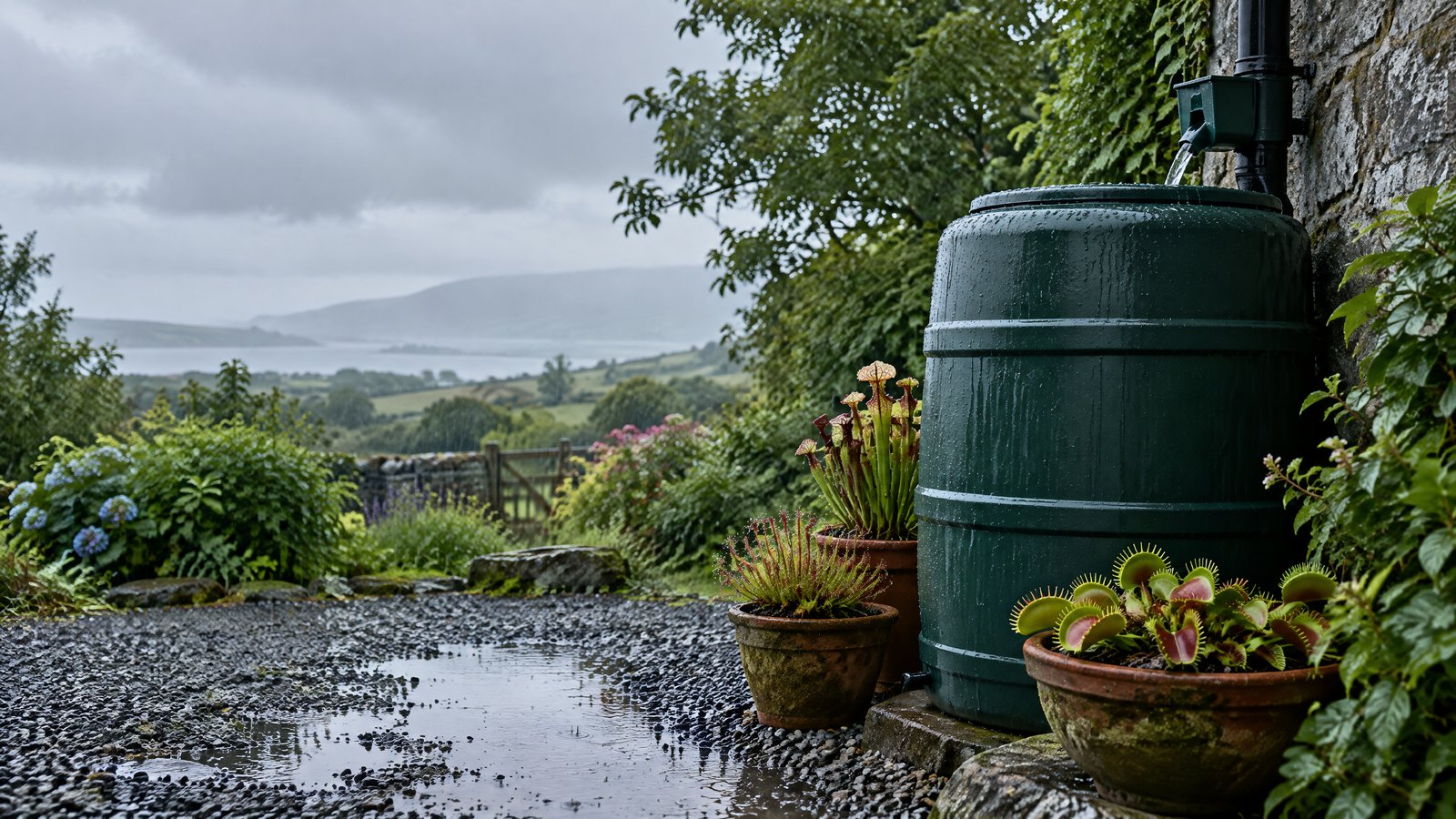
In Ireland, rain is a national conversation, a cultural touchstone, and occasionally a meteorological nuisance. But for the carnivorous plant grower, every grey Atlantic front rolling in from Galway Bay is pure, unadulterated botanical gold.
Rainwater is naturally soft, mildly acidic (typically with a pH between 5.5 and 6.2 due to dissolved atmospheric carbon dioxide), and virtually free of dissolved mineral salts. In our maritime climate, harvesting rainwater is not a luxury—it is the single most economical and reliable way to sustain a collection of Venus flytraps, sundews, and pitcher plants indefinitely.
However, collecting rainwater is not simply a matter of sticking an open bucket under a rusty gutter and hoping for the best. To protect your plants from contaminants, you need a thoughtful, well-designed collection and storage setup.
Step 1: Evaluating Your Roof Catchment Surface
The cleanliness of your harvested water begins at the roof. Rain is pure as it falls from the clouds, but as it washes over roofing materials, it picks up whatever compounds are soluble.
- Excellent Surfaces:
- Natural Slate: Traditional Irish blue/black slate is non-porous and chemically inert. It yields water with TDS readings as low as 5 to 12 ppm.
- Glazed Ceramic Tiles: Smooth and non-reactive; excellent runoff.
- Glass and Polycarbonate: Greenhouse and conservatory roofs provide pristine runoff, free from heavy moss.
- Plastic Gutters and Downpipes: Standard modern uPVC gutters are entirely safe.
- Problematic Surfaces to Avoid or Test Carefully:
- New Concrete Tiles: Concrete is formulated with Portland cement, which contains high concentrations of calcium oxide. Water running off newly installed concrete tiles can have a TDS of 150+ ppm and an alkaline pH of 8.0+. (Older weathered tiles over 10 years old are generally safer, but always verify with a meter).
- Asphalt Felt / Bitumen: Mineral-surfaced roofing felt used on sheds can leach toxic hydrocarbons, mineral grit, and oily residues, particularly during warm weather.
- Uncoated Zinc or Copper Flashings: Runoff passing over bare copper or zinc ridges can pick up trace heavy metal ions that are phytotoxic to sensitive bog plants.
Step 2: Choosing and Installing a Water Butt
A standard domestic water butt (100 to 250 litres) is inexpensive, easy to install, and readily available from Irish hardware stores and agricultural co-ops.
Essential Features to Look For:
- Opaque Black or Dark Green Plastic: Sunlight penetrating translucent plastic allows green unicellular algae to bloom within days. Thick, UV-stabilised dark plastic keeps the interior in perpetual darkness, preventing algal growth.
- Rainwater Diverter Kit: A downpipe diverter connects directly to your round or square uPVC downpipe. It channels rainwater into the butt until full, at which point excess rainwater automatically continues down the standard drain, preventing overflow and flooding around house foundations.
- Elevated Stand: Always mount the butt on a sturdy, purpose-built stand. This provides sufficient gravitational head to fill watering cans directly from the bottom tap.
Step 3: Filtration and Debris Management
The primary source of contamination in water butts is organic matter: decaying autumn leaves, twigs, bird droppings, and clumps of roof moss dislodged during heavy storms.
- Gutter Mesh / Balloon Guards: Insert plastic mesh balloon guards at the top of the downpipe outlet to stop large leaves from entering the system.
- The "First Flush" Effect: After long dry spells in summer, dust and pollen accumulate on the roof. The first 15 minutes of a storm wash this debris into the gutters. You can use a dedicated first-flush diverter or manually disconnect the diverter hose for the first hour of heavy rain after a drought.
- Fine Inlet Filter: Wrap a segment of nylon stocking or fine stainless steel mesh over the hose where it enters the water butt to catch fine silt and pine needles.
Step 4: Preventing Algae, Mosquitoes, and Stagnation
- Insect Prevention: During warm summer weeks in Ireland, common mosquitoes (Culex pipiens) search for stagnant bodies of water to deposit egg rafts. Within 48 hours, hundreds of wriggling larvae appear. Keep the top lid firmly clamped, and plug any unused overflow holes with silicone or fine wire mesh.
- Algal Control: If water begins to turn greenish, it is receiving light. Ensure the lid is seated tightly. Never add chemical algaecides or chlorine tablets to a water butt intended for carnivorous plants!
- Winter Maintenance: In November, drain the butt down by roughly 20% to allow expansion room if ice forms during prolonged frost, preventing cracked taps. Once a year in late winter, drain the butt completely and rinse out the accumulated layer of fine organic sediment from the floor.
With a single 200-litre water butt connected to a garden shed or porch roof, an Irish grower will easily harvest several thousand litres of pure, pristine rainwater each year—ensuring your carnivorous bog garden never goes thirsty.
Keep the collection system as clean as the water source
Rainwater is naturally low in minerals, but its quality after collection depends on the roof, gutters, diverter and storage. Choose a relatively clean catchment, keep leaves and debris out of the system, and use a close-fitting lid. A water butt that smells stale or contains heavy organic debris should be emptied and cleaned rather than treated as an indefinitely safe reservoir.
Build a simple routine around the system: clear gutters, inspect the diverter after storms, use stored water regularly, and clean the butt at least annually. During dry spells, calculate your likely use before relying on one small container; tray-grown outdoor plants can use water quickly in sun and wind. The RHS recommends filters at the inlet, a lidded butt and regular cleaning, and specifically lists rainwater as suitable for carnivorous plants. RHS rainwater collection
Continue learning
- Water for Carnivorous Plants — Compare rainwater with other low-mineral options.
- Irish Tap Water for Carnivorous Plants — Assess a local supply when rainwater is unavailable.
- Venus Flytrap Soil — Avoid mineral accumulation in sensitive medium.
Research & sources
These references support the practical and conservation notes on this page.
- Royal Horticultural Society — How to grow carnivorous plants: Specialist compost, rainwater and species-specific growing guidance.
- Royal Horticultural Society — Collecting, storing and reusing water: Rainwater collection, water-butt hygiene and soft-water guidance.
- Uisce Éireann — Hard water: Address-level information on Irish public water hardness.
- New York Botanical Garden — Venus Flytrap Houseplants: Low-mineral water and specialist medium guidance for Dionaea.
Frequently Asked Questions
Can I collect rainwater from any roof in Ireland?
Most slate, glazed clay tile, and clean plastic/polycarbonate greenhouse roofs are excellent. Avoid brand-new unsealed concrete tiles (which leach alkaline lime for the first 2-3 years) and bitumen/asphalt felt roofs that can leach petroleum oils.
How do I prevent mosquito larvae and algae in my water butt?
Ensure your water butt has a tight-fitting, opaque black lid that excludes sunlight (starving algae). Fit a fine insect mesh over the downpipe diverter entrance to physically prevent female mosquitoes from laying eggs.
How much water does a collection of 10 plants need per week in summer?
In a typical Irish summer, 10 medium pots standing in trays will consume approximately 5 to 10 litres of water per week depending on wind, temperature, and sun exposure. A standard 100-litre or 200-litre water butt provides a generous multi-month buffer.