Temperate Butterwort Winter Care in Ireland: Understanding the Resting Bud
Learn how cultivated Pinguicula vulgaris and P. grandiflora overwinter as compact buds, why Mexican butterwort advice is different, and how to manage winter moisture without a rigid recipe.
By Bog & Bite · Published 9 November 2026
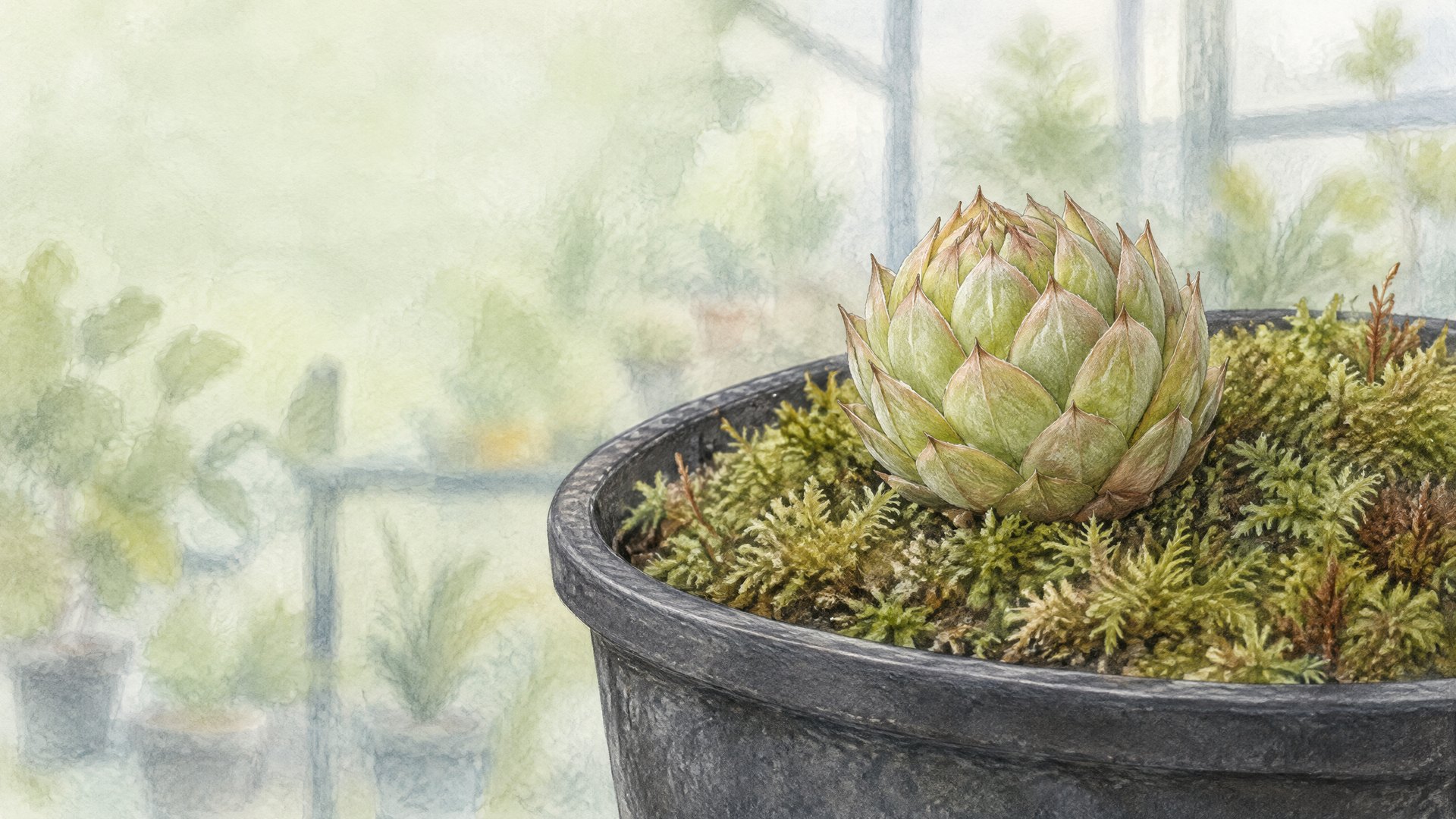
A cultivated butterwort can lose its broad summer leaves and become a small, pointed bud in autumn. For an identified cold-temperate species such as Pinguicula vulgaris or P. grandiflora, this may be its normal winter form: a hibernaculum, or resting bud. It is a different seasonal strategy from the succulent rosette of many Mexican windowsill butterworts.
This guide focuses on those two cold-temperate species in cultivation. It is not a winter recipe for every Pinguicula, and it is not advice to collect plants from an Irish bog. The aim is to recognise the resting form, keep the plant in suitable seasonal conditions and avoid confusing one group's water requirements with another's.
For a comparison with the indoor group, read Mexican butterwort winter care. The Butterwort plant hub provides the wider overview.
Identify the plant before changing its care
The International Carnivorous Plant Society includes P. vulgaris and P. grandiflora in its cold-temperate butterwort guide. It describes these plants forming winter buds at the beginning of autumn and needing cold winter conditions. ICPS cold-temperate Pinguicula guide
UC Davis Botanical Conservatory separates butterworts into Mexican or tropical, warm-temperate and cold-temperate groups, and emphasises that species within a group can still differ. A label that says only “butterwort” therefore leaves an important care question unanswered. Keep the species name and any origin information with the pot. Do not infer cold hardiness simply because a plant is small or because the genus also includes Irish natives.
This distinction prevents two opposite mistakes: drying a cold-temperate bud according to Mexican succulent-phase advice, or exposing a Mexican houseplant to an outdoor winter because another butterwort tolerates cold.
Recognise the hibernaculum without disturbing it
UC Davis describes the cold-temperate hibernaculum as a small pinecone-shaped cluster of leaves. The active rosette dies back, leaving a compact structure instead of the broader leaves used in the growing season. The Irish Peatland Conservation Council describes butterwort winter resting buds as rootless. Treat that as a reason for gentle handling, not a reason to pull up a bud and inspect its underside. UC Davis butterwort guide
A bud forming in the centre as older leaves fade can be consistent with the seasonal cycle. However, seasonal change is not a diagnosis for every unhealthy-looking plant. If the centre itself is collapsing or the pot has lost drainage, review those conditions before assuming it is resting normally. A dated photograph and a clear label are useful ways to follow the change without touching the bud.
The ICPS also illustrates P. grandiflora hibernacula with gemmae at their bases. These are small vegetative propagules, not automatically pests or debris. Their presence does not mean you need to start a propagation project in winter. Identify them first and avoid disrupting the main bud.
The hero image above is an original botanical illustration of a resting bud, not a photograph of a measured cultivation trial. Use the specialist sources for species identification.
Provide a cold seasonal setting, not forced freezing
The sources agree that cold-temperate butterworts need a cool winter phase. The ICPS explains that winter buds help these plants withstand freezing in their native seasonal environments. This is not an instruction to freeze a pot deliberately, nor does it mean that every cultivated plant needs an identical number of frosts.
For an Irish collection, assess a sheltered outdoor container or an unheated cold frame rather than treating a heated living-room shelf as equivalent. The suitable choice depends on the named plant, its container and local exposure. Keep the setting cool while protecting the pot from being overturned or battered by weather.
Do not transfer the temperature ranges and durations in the ICPS seed-sowing section to an adult hibernaculum. Seed stratification is a separate process. This guide does not prescribe a refrigerator routine or a minimum freezing temperature for adult plants.
Keep moisture advice attached to the growing system
Winter watering is the part most easily distorted by a short online tip. UC Davis explicitly advises keeping cold-temperate butterworts wet and cool. That guidance does not support drying every winter bud as if it were a Mexican succulent rosette.
There is also a different specialist account worth understanding. In An Alternative Cultivation Method for European Pinguicula, Iwein Coppens describes plants grown on porous rocks, then overwintered in an insulated, glass-covered box with rain excluded. His plants experienced very dry winter conditions, and he discusses the danger of excessive winter moisture. These observations belong to that particular system; they are not a documented Irish trial or a universal dry-pot instruction.
For an ordinary container, a cautious approach is to retain moisture while ensuring the container drains and the bud is not buried or washed out. Check the actual medium, not just the saucer. A sheltered pot can miss rainfall, while an exposed one may receive far more than expected. Do not let “keep wet” become permission to ignore a blocked drain, or let a dry-rock experiment become permission to desiccate an unfamiliar plant.
Use a suitable water source and an unfertilised medium chosen for the species. If you need to review the water supply, start with the complete guide to water for carnivorous plants. Do not add conventional fertiliser to the pot to make a winter bud expand.
Avoid unnecessary winter repotting
A smaller winter form is not, by itself, evidence that the pot or substrate has failed. If the bud is intact and the container is stable, observation may be more useful than a wholesale change of medium. Handle the plant only when there is a clear reason, such as a displaced bud or a drainage problem that cannot be addressed without intervention.
The ICPS provides one peat-and-mineral cultivation mix for cold-temperate butterworts. The World of Pinguicula account uses a different rock-based system. Neither is proof that all butterworts require the same substrate, nor that any alternative is automatically lethal. This winter guide is not a substrate trial: retain a suitable established setup unless you have identified a specific problem.
A brief note of the species, pot location, rain protection and condition of the bud gives you a useful record for the next season. Avoid changing water, temperature, substrate and feeding together; otherwise it becomes difficult to understand what changed the plant's response.
Watch spring emergence and late frost together
UC Davis describes the hibernaculum opening into active leaves as temperatures warm. Let that visible change guide your attention rather than promising emergence on a particular week. Check moisture as the leaves develop and the container starts to behave differently from its winter state.
Coppens warns that mild late-winter weather can encourage early growth before a later frost. In an Irish container collection, that makes the forecast worth watching once a bud starts to open. An unheated frame can need ventilation in mild sunshine as well as protection during adverse weather; it should not be treated as a permanently sealed box.
Do not assume that a flowering date or rate of growth reported by one grower will apply to your plant. Species, maturity and conditions vary. Keep the label and observations so that next year's decisions are based on the same plant rather than a generic timetable.
Keep cultivation separate from wild habitats
The Irish Peatland Conservation Council lists P. vulgaris and P. grandiflora among Ireland's butterworts and describes their wet habitats. It also identifies drainage, habitat loss and nutrient enrichment as threats to carnivorous plants. IPCC Irish carnivorous plant account
Observe wild plants where they grow. Use clearly labelled cultivated stock for container growing, and do not move plants, moss or substrate out of a wild site to recreate a pot. Do not plant cultivated carnivorous plants into bogland. A contained collection lets you study winter growth without altering the habitat. These are responsible cultivation recommendations, not a statement of collection law.
A short winter check
- Confirm the species before applying cold-temperate care.
- Recognise a compact winter bud without pulling it apart.
- Maintain a cool seasonal setting rather than a heated-room routine.
- Monitor moisture and drainage instead of copying a fixed watering interval.
- Keep specialist dry-winter experiments in their original context.
- Watch the forecast as active leaves begin to return.
Continue learning
- Mexican butterwort winter care explains why a succulent rosette needs a different approach.
- Temperate sundew winter dormancy covers another hibernaculum-forming group without making their watering routines interchangeable.
- Water for carnivorous plants in Ireland helps you review the water source behind your seasonal care.
Research & sources
These references support the practical and conservation notes on this page.
- International Carnivorous Plant Society — Growing cold temperate Pinguicula: Species-specific winter buds, cold seasonal requirements, cultivation medium and illustrated P. grandiflora gemmae; seed stratification advice is not used as an adult dormancy prescription.
- UC Davis Botanical Conservatory — Butterworts (Pinguicula sp.): Distinguishes Mexican, warm-temperate and cold-temperate groups; describes winter hibernacula, wet and cool care, and return of active leaves as temperatures warm.
- World of Pinguicula — Iwein Coppens — An Alternative Cultivation Method for European Pinguicula: A documented specialist rock-cultivation experiment and warnings about moisture balance and early emergence before late frost; not a universal dry-winter recommendation.
- Irish Peatland Conservation Council — Carnivorous Plants: Killers in the Bog: Irish P. vulgaris and P. grandiflora habitat context, rootless winter resting buds and threats to carnivorous-plant habitats.
Frequently Asked Questions
Is a temperate butterwort winter bud the same as a Mexican succulent rosette?
No. Cold-temperate species such as Pinguicula vulgaris and P. grandiflora form a compact hibernaculum as their active leaves disappear. Many Mexican butterworts instead produce a smaller succulent leaf form. Their winter watering and temperature needs should not be treated as interchangeable.
Should I deliberately freeze my butterwort to start dormancy?
No. The ICPS describes winter buds as an adaptation to cold winters, not an instruction to force a pot to freeze. Provide a suitable cool seasonal setting for the named cold-temperate plant and consider the exposure of its container. Do not copy seed-stratification temperatures as adult-plant care.
Should the winter bud be kept completely dry?
Do not use complete dryness as a general rule. UC Davis recommends wet, cool conditions for cold-temperate butterworts. A World of Pinguicula article reports dry winter treatment in a particular insulated, rain-shielded rock system; that is not a universal prescription for ordinary pots. Monitor moisture, drainage and the bud rather than copying an isolated detail.
Are small buds beside a Pinguicula grandiflora hibernaculum necessarily pests?
Not necessarily. The ICPS illustrates Pinguicula grandiflora winter hibernacula with gemmae at their bases. These are small vegetative propagules. Identify what you see before removing it, and avoid pulling apart the main resting bud just to investigate.
When should I expect the summer leaves to return?
Watch the plant rather than setting a deadline. UC Davis describes cold-temperate butterworts emerging from hibernacula as temperatures warm. Weather, species and growing conditions differ, so neither emergence nor flowering should be promised for a fixed date.