Butterworts
Pinguicula Species & Hybrids
Delicate rosettes, orchid-like flowers, and ruthless fungus-gnat hunting for bright windowsills.
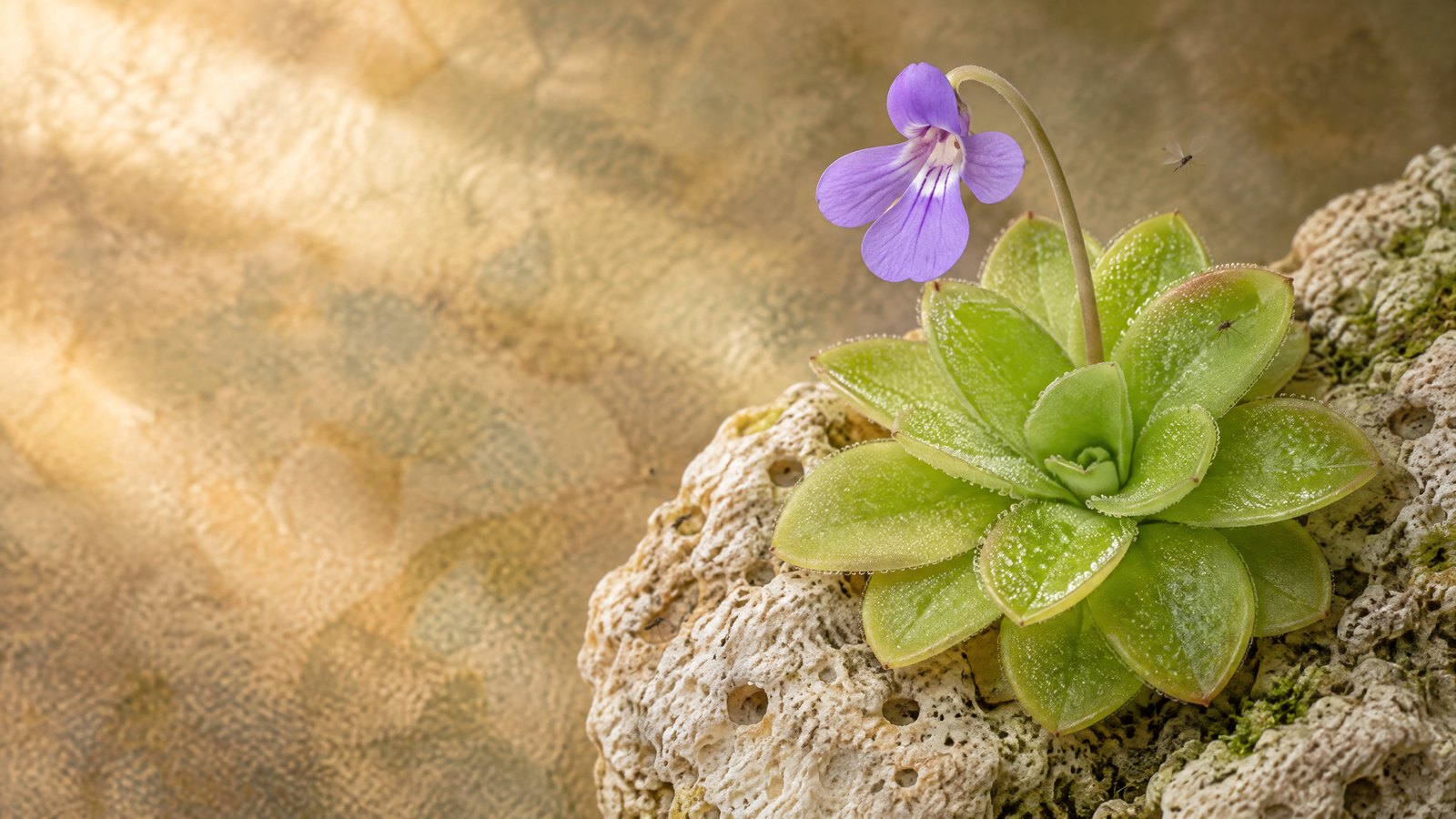
Pinguicula—the butterworts—are among the most charming and deceptively lethal members of the carnivorous plant kingdom. Named from the Latin pinguis ('fat') for the greasy, glistening sheen on their leaves, they feature compact rosettes of soft, succulent foliage topped with breathtaking flowers that resemble miniature violets or orchids.
The leaf surface is covered in microscopic stalked glands that secrete glue-like mucilage, while sessile glands secrete a potent cocktail of digestive enzymes. When small flying insects land on the rosette, they are cemented down and dissolved.
For Irish indoor gardeners, Mexican butterworts (such as Pinguicula moranensis, P. esseriana, and P. 'Tina') are arguably the most hassle-free carnivorous plant of all: they thrive in typical household light levels, love mineral-rich gritty composts, and can catch small insects around a bright windowsill.
Mexican butterworts are not miniature bog plants
Many of the butterworts sold for windowsills are Mexican Pinguicula. They often produce broad sticky carnivorous leaves when actively growing, then make smaller succulent leaves when conditions shift. This is why a care routine copied from a flytrap or sundew can cause problems: permanently waterlogged peat is not the universal answer for this group.
Use a low-nutrient, well-aerated medium, give bright light with caution around harsh hot glass, and let the leaf form guide your watering. When a plant has clearly moved into a compact succulent phase, reduce water gradually rather than maintaining a deep tray. Exact substrate mixes, tray depths and seasonal timing vary with species, hybrid, light and humidity, so do not mistake a fixed recipe for a rule of nature.
Think of prey capture as a bonus, not a cure
Butterwort leaves can catch small insects, but that does not remove the need for light and careful watering. Do not add conventional fertiliser to the growing medium in pursuit of faster growth, and do not overload small leaves with large prey. The International Carnivorous Plant Society distinguishes Mexican Pinguicula from bog plants and explains their seasonal leaf forms in detail. ICPS Mexican Pinguicula guide
A calm care routine
Check the centre of the rosette, the moisture of the medium and the newest leaves before intervening. If the plant is in a fleshy resting phase, reduce water and make sure air can circulate around the pot. If it is in active sticky-leaf growth, provide bright conditions and avoid sudden swings between drought and standing water. Repot only when the medium has degraded or the plant has clearly outgrown its space. Consistency is more useful than chasing a rigid formula.
Related Irish growing guides
- Butterworts: A Guide for Ireland — Read the complete seasonal-care guide.
- Sundews in Ireland — Learn why Drosera and Pinguicula should not share one water routine.
- Carnivorous Plant Beginner Mistakes — Avoid treating every carnivorous plant as a waterlogged bog plant.
Why Mexican Butterworts Excel in Irish Homes
- The Remarkable Two-Season Life Cycle: In summer, Mexican Pinguicula produce wide, sticky, carnivorous leaves that catch midges and gnats. In late autumn, triggered by shorter days, they transform into tight rosettes of thick, non-carnivorous succulent leaves. In winter, you greatly reduce watering, keeping the gritty mix barely damp.
- Gritty Mineral Substrates: Unlike other carnivores that demand pure acid peat, Mexican Pinguicula love gritty, alkaline or neutral mixes: equal parts perlite, horticultural pumice, silica sand, and a small fraction of peat.
- East-Facing Windowsill Magic: They do not require the blistering outdoor sun demanded by flytraps. A gentle east-facing windowsill receiving morning sun is ideal.
Research & sources
These references support the practical and conservation notes on this page.
- International Carnivorous Plant Society — Growing Mexican Pinguicula: Seasonal leaf forms and group-specific care.
- New England Carnivorous Plant Society — Mexican Pinguicula Care: Watering changes during the succulent phase.
- Royal Horticultural Society — How to grow carnivorous plants: Specialist compost, water and dormancy guidance across several carnivorous plant groups.
Common mistakes to avoid
- Overwatering during their winter succulent phase, causing fungal crown rot.
- Planting in pure, dense peat moss rather than an open, gritty, aerated mineral mix.
- Placing under harsh, scorching summer glass without acclimation, bleaching the leaves.
- Mistakenly feeding large insects or flies to tiny butterwort leaves.