15 Carnivorous Plant Mistakes Beginners Make (And How to Fix Them)
From watering with hard tap water and feeding hamburger meat to throwing away dormant plants in November. Here are the 15 classic pitfalls and how to easily avoid them.
By Bog & Bite · Published 25 September 2026
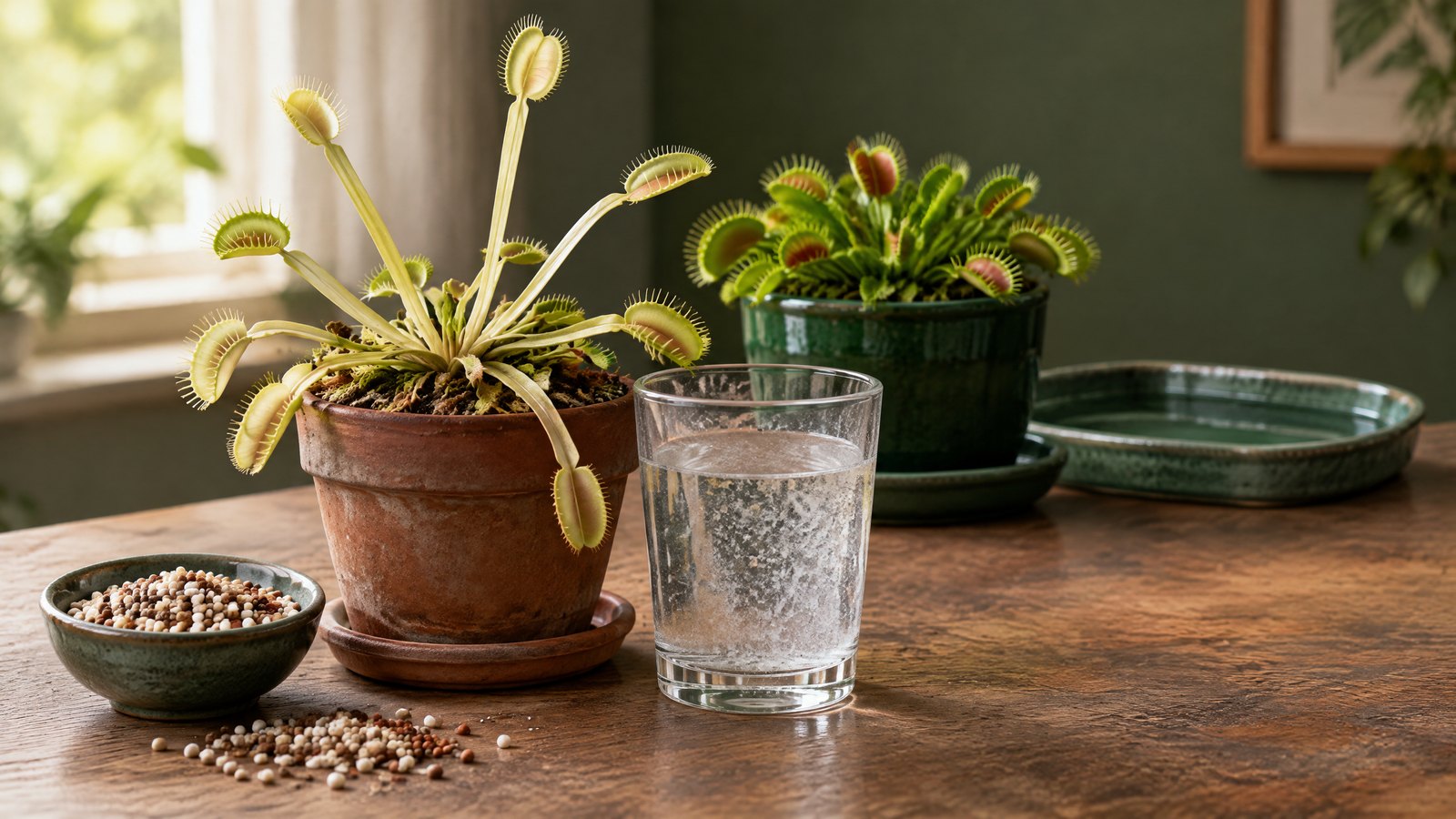
Carnivorous plants have an unfair reputation for being impossibly temperamental, delicate, and destined to die within a few weeks of leaving the shop.
In truth, healthy carnivorous plants are remarkably tough, tenacious organisms that have colonised some of the harshest, most waterlogged, nutrient-barren ecosystems on the planet. When they perish in human care, it is almost never because they were fragile; it is because standard gardening intuition—the rules that keep geraniums, tomatoes, and monsteras happy—is 180 degrees backwards when applied to wetland bog carnivores.
Here are the 15 most common mistakes made by beginners in Ireland, and the exact steps to rectify them.
1. Watering with Municipal Tap Water
- The Mistake: Using water straight from the kitchen tap. In limestone counties across Ireland, tap water contains 200–500 ppm of dissolved minerals that burn sensitive roots.
- The Fix: Only use pure rainwater, reverse osmosis water, or certified deionised water with a TDS under 40 ppm.
2. Planting in Standard Multipurpose Garden Compost
- The Mistake: Repotting into a general-purpose mix, including one with added fertiliser, without checking whether it suits the plant. Such mixes can create a nutrient or mineral profile that is unsuitable for sensitive carnivorous plants.
- The Fix: Choose a documented low-nutrient medium for the specific plant. A common flytrap starting point is unfertilised sphagnum peat with perlite or silica sand, while other carnivorous groups can require different mixes.
3. Light Starvation Indoors
- The Mistake: Placing plants on coffee tables, bookshelves, or north-facing window ledges. Flytraps and sundews need intense, direct UV light.
- The Fix: Position on an unobstructed south- or west-facing windowsill, outdoors in full sun, or beneath a 4000K–6500K full-spectrum LED grow light for 12–14 hours daily.
4. Throwing Away "Dead" Plants in November
- The Mistake: Assuming a Venus flytrap is dead when its summer leaves blacken and collapse in autumn.
- The Fix: Recognise winter dormancy. If the central rhizome is firm and white/green, it is resting. Keep it cool (2°C–10°C) and damp until spring.
5. Feeding Human Food or Raw Meat
- The Mistake: Dropping bits of bacon, chicken, cheese, or hamburger into traps.
- The Fix: Carnivorous plants only digest insects. Animal fat decomposes into bacterial sludge that rots the entire leaf.
6. Chronically Triggering Traps for Fun
- The Mistake: Poking traps with pencils or fingers to watch them snap.
- The Fix: Each trap has an energy budget of only 3 to 5 snaps before dying. Leave traps alone to catch natural prey.
7. Leaving Plants in Clear Plastic Shipping Domes
- The Mistake: Keeping plants sealed inside the clear plastic packaging cubes they were sold in.
- The Fix: Discard the plastic dome immediately. Under sunlight, the trapped air overheats and encourages grey mould (Botrytis).
8. Letting the Soil Dry Out
- The Mistake: Treating bog plants like succulents and allowing the compost to dry to a crisp between waterings.
- The Fix: During the summer growing season, keep pots standing in 1–2 cm of pure water in a saucer (the tray method).
9. Submerging Plants in Stagnant Water During Winter
- The Mistake: Leaving dormant plants sitting in deep standing water trays throughout freezing, dark Irish winters.
- The Fix: In November, remove the water trays. Keep the media cool and damp rather than waterlogged.
10. Treating All Carnivorous Plants as One Climate Group
- The Mistake: Believing that a tropical Malaysian Nepenthes and an outdoor Canadian Sarracenia have identical care needs.
- The Fix: Research the specific genus: temperate plants need cold winters outdoors; tropicals need heated indoor warmth year-round.
11. Using Porous Terracotta Pots
- The Mistake: Potting carnivores into classic unglazed terracotta.
- The Fix: Terracotta evaporates moisture rapidly and leaches mineral salts into the peat. Use plastic, glazed ceramic, or resin pots with drainage holes.
12. Using Builders' Sand or Marine Grit
- The Mistake: Mixing ordinary building sand or gravel into the soil.
- The Fix: Ordinary sand contains limestone particles and crushed sea shells that leach calcium. Only use pure horticultural quartz silica sand (1–3 mm).
13. Fertilising the Soil
- The Mistake: Adding plant food, baby bio, or worm castings to the potting soil.
- The Fix: Never add fertiliser to the media. If you must feed indoor plants, apply a minute foliar spray of Maxsea 16-16-16 at one-quarter strength directly to leaves once a month in summer.
14. Confusing Low Humidity with Light Deficiency
- The Mistake: Blaming dry air when Nepenthes fail to produce pitchers, while ignoring that the plant is sitting in a dim room.
- The Fix: Increase light intensity first. Light fuels the photosynthetic energy required to construct pitchers; humidity merely extends their lifespan.
15. Collecting Wild Plants from Irish Peat Bogs
- The Mistake: Digging up native wild sundews or butterworts during a weekend walk in the bog.
- The Fix: Do not remove wild plants from Irish bogs or wetlands. Choose responsibly sourced nursery-propagated plants and check current Irish legal guidance and site permissions.
Triage the basics before buying more equipment
When a plant looks unwell, begin with the conditions that most often matter: plant identity, water source, light, medium, drainage and season. Do not add conventional fertiliser, change the water, repot and feed traps all in one day. That approach makes it harder to tell what helped and can increase stress.
Many beginner problems come from treating all carnivorous plants as if they live in the same habitat. A flytrap, a Mexican butterwort and a tropical Nepenthes can all be sold beside one another but have different root-zone, light and winter needs. Match the plant to a practical home, use rainwater or another low-mineral option where appropriate, and keep the guidance species-specific. The RHS notes that most carnivorous plants do not need added fertiliser and that winter watering and temperature requirements vary by dormancy and hardiness. RHS growing guide
Continue learning
- Water for Carnivorous Plants — Start with a conservative water plan.
- Sundews in Ireland — Understand why species identity changes winter care.
- Butterworts: A Guide for Ireland — Avoid keeping Mexican butterworts like permanently waterlogged bog plants.
Research & sources
These references support the practical and conservation notes on this page.
- International Carnivorous Plant Society — Growing Subtropical Drosera: Care scope for commonly grown subtropical sundews.
- International Carnivorous Plant Society — Growing Mexican Pinguicula: Seasonal leaf forms, water and medium variation in Mexican butterworts.
- Irish Peatland Conservation Council — Carnivorous Plants: Killers in the Bog: Irish native sundews, peatland habitats and conservation context.
- Botanical Society of Britain and Ireland — Drosera rotundifolia species account: Habitat, Irish distribution and peatland pressures for round-leaved sundew.
Frequently Asked Questions
What is the number one cause of dead carnivorous plants in Ireland?
Using hard tap water. In most of Ireland's limestone counties, tap water contains hundreds of parts per million of dissolved calcium and magnesium that chemically burn the roots within weeks.
Is it harmful to play with the traps of a Venus flytrap?
Yes! Triggering traps without real prey wastes immense metabolic energy. Each trap can only close 3 to 5 times before it dies. Chronic triggering exhausts the rhizome.
Why do garden centres sell flytraps in tiny plastic cubes?
The clear plastic cups are shipping packaging designed to retain humidity on retail shelves and prevent customers from touching the traps. As soon as you bring the plant home, remove the lid to provide fresh airflow and sunlight.