Propagating Mexican Butterworts from Leaf Pullings: An Irish Grower's Guide
Learn when a cultivated Mexican butterwort is ready for leaf pullings, how to preserve the leaf base, and how to manage moisture without promising a fixed result.
By Bog & Bite · Published 23 November 2026
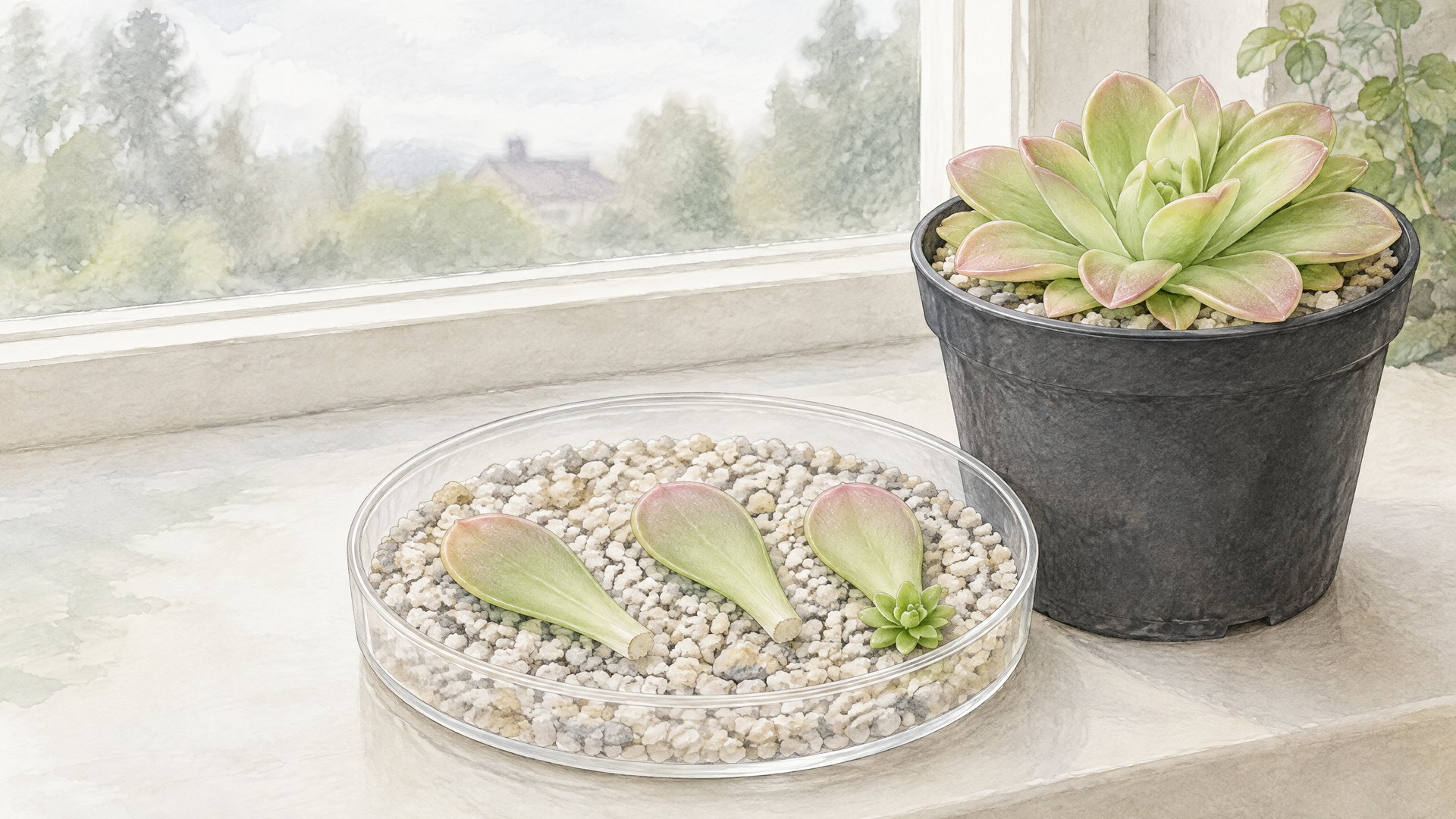
A detached Mexican butterwort leaf can sometimes produce a new plant at its base. This makes leaf pullings an interesting small propagation project for growers with a healthy, named Pinguicula. The important details are preserving the leaf base and keeping the pulling neither waterlogged nor desiccated.
For an Irish windowsill collection in late November, the first decision is whether to start at all. A plant entering its compact winter leaf form does not have to be disturbed immediately. Preparing a suitable container and waiting for the right stage is a useful outcome too. This guide extends Mexican Butterwort Winter Care in Ireland, which explains how to recognise the succulent rosette.
Identify the Mexican butterwort before choosing leaves
The International Carnivorous Plant Society emphasises that Mexican Pinguicula vary considerably. Many produce broad, sticky carnivorous leaves during one phase and smaller succulent leaves during another. Some retain carnivorous leaves throughout the year; P. gigantea is a familiar example that does not follow the same succulent-leaf routine. ICPS Mexican butterwort growing guide
Do not use the genus name alone as a care label. Check the species or hybrid and inspect the current leaves. A robust rosette with accessible outer leaves is a better candidate for a small trial than a recently stressed plant with very little living foliage. Propagation should not be used to explain away a collapsing parent plant.
This article concerns cultivated Mexican butterworts, not the resting buds of cold-temperate species. For that different growth cycle, consult Temperate Butterwort Winter Care in Ireland. Keep those routines separate.
Choose the leaf form, not a compulsory date
The ICPS propagation guide generally favours succulent winter leaves late in the phase, just before or as the first summer carnivorous leaves appear. It also says that pullings taken at other times can work, with success influenced by leaf thickness and the method used. Its spring calendar examples concern particular growing conditions; they are not a guaranteed schedule for every Irish home. ICPS Mexican Pinguicula leaf-pulling guide
Serge Lavayssiere's specialist guide at World of Pinguicula also selects winter leaves around the start of spring. Together, these sources support waiting for suitable succulent material rather than removing leaves merely because it is November. World of Pinguicula propagation guide
If you attempt a small trial earlier, accept that the leaf may be slower to respond or may fail. Avoid repeated harvesting from the same small plant in pursuit of a quick result. A spare container is easier to replace than a damaged growing point.
Prepare a damp surface before handling the parent
The specialist guides describe several propagation methods. For a first trial, use one straightforward surface method instead of combining instructions for bags, water and growing medium. A clean shallow container with a lid you can adjust allows you to watch the leaves without repeatedly moving them.
The ICPS describes laying leaves on a damp mix of one part vermiculite to two parts perlite, and also describes using the grower's usual suitable Mexican butterwort medium. World of Pinguicula uses mineral materials such as vermiculite, perlite or sand. These are examples of workable media, not a claim that one recipe is universally best.
Moisten the medium so it is damp, with no pool covering the surface. Set the container where it will receive light without direct sun. The ICPS explicitly warns that propagation leaves do not need intense light and that a container in direct sunshine can overheat. Choose the position before taking the pulling so it need not sit around while you arrange equipment.
The original hero illustration shows a parent rosette and representative leaf-pulling stages. It is not a local experiment or a timed sequence showing how fast your own leaves will grow.
Retain the complete leaf base
World of Pinguicula explains that the complete leaf, including its pale or white base, should be retained because plantlets develop in that basal area. This is why a leaf pulling is not simply a piece snipped from the middle of a leaf.
Select an accessible outer leaf and tease it gently. The ICPS warns that Mexican butterworts can be fragile and that rough handling may cause the whole rosette to come apart. Do not pull against the growing point or continue if the plant is lifting with the leaf. Stop when you cannot see or reach the base safely.
Some named plants need a different approach. The ICPS describes lifting dormant P. moranensis-type plants to peel away outer leaves, while warning that handling or repotting other species at an unsuitable stage can dismantle them. Lifting the parent is therefore not a compulsory step for every plant. Read the species-specific examples before attempting it.
For a beginner's trial, take only a small number of suitable leaves and leave the central growth undisturbed. Neither a robust example in a specialist photograph nor a suggested maximum harvest should be treated as a promise of safety for a weak plant. If access is poor, waiting is preferable to forcing the leaf off.
Lay the pulling flat and monitor moisture
Place the leaf horizontally on the medium surface, with its basal end touching the medium. Do not bury the blade or cover it with a layer of wet material. World of Pinguicula explicitly uses a horizontal, unburied placement, while the ICPS describes laying leaves on top of damp medium.
A cover can help reduce drying, but a permanently closed lid is not automatically suitable. The ICPS adjusts enclosure and moisture according to the condition of the leaves: too much wetness encourages deterioration, while excessive drying makes leaves shrivel. Check what is happening inside your container rather than copying one grower's lid setting.
If a leaf remains wet or begins to rot, review the moisture and increase ventilation as appropriate. If leaves shrivel and the medium has dried, add a little water to the medium rather than flooding the container. Make modest adjustments and observe the result. Condensation alone does not show that every leaf is sitting in suitable conditions.
Keep labels for the parent plant and the date you took the pulling. These are your own records, not evidence of a success rate. Avoid mixing unnamed leaves in one container if you want to know which plant produced a later rosette.
Wait for actual plantlets and roots
The specialist guides illustrate leaves swelling at the base and producing small rosettes. A leaf may form more than one plantlet, but that is a possibility rather than an expected yield from every pulling. Leaves differ, and some may deteriorate without producing a viable plant.
Do not disturb each leaf to search for roots. Observe the basal area and visible new growth. The ICPS advises potting plantlets when the original leaf is deteriorating and roots can be seen. That is a developmental cue, not a fixed number of days after taking the leaf.
Move established plantlets carefully into a medium suited to the named Mexican butterwort. Small new plants still need attention to moisture and light; a separate pot does not make them equivalent to a mature rosette. Retain the parent's identity on the new pot.
Do not add fertiliser or rooting products simply because progress seems slow. They are not required for the basic leaf-pulling method described here. This guide is not a feeding programme, and increasing inputs does not solve unsuitable leaf material or a badly balanced container.
Keep this method separate from bog-plant propagation
Mexican butterworts should not automatically receive the permanently wet regime used for some bog plants. The ICPS growing guide stresses that substrate, watering method and growing environment must be considered together. The needs of a detached leaf, a rooted plantlet and the succulent-phase parent are also different stages of the same project.
Use the Butterworts plant hub for broader care context. If you are also propagating sundews, the Cape sundew leaf-cutting guide describes a different plant and technique; it is not a substitute for Mexican butterwort instructions.
A useful first project is small enough to inspect calmly. Choose a healthy parent, preserve the leaf base, provide a damp surface without intense direct sun, and wait for genuine plantlets. If your current plant or conditions are unsuitable, postpone propagation and maintain the parent instead. There is no need to promise a batch of new plants by a particular date.
A short leaf-pulling checklist
- Confirm that the parent is a cultivated Mexican butterwort with a known identity.
- Choose suitable leaf material and accept that waiting for a later phase may be better.
- Prepare a clean container and damp medium before detaching leaves.
- Remove an accessible outer leaf gently, retaining its pale base.
- Lay the pulling flat on the surface without burying or submerging it.
- Keep it out of direct sun and adjust moisture or ventilation to its condition.
- Pot plantlets when roots are visible and the original leaf is deteriorating.
Research & sources
These references support the practical and conservation notes on this page.
- International Carnivorous Plant Society — Mexican Pinguicula Leaf Pullings: Leaf form and timing, fragile rosette handling, damp surface propagation, condition-led enclosure adjustments, protection from direct sun and developmental cues for potting plantlets.
- International Carnivorous Plant Society — Growing Mexican Pinguicula: Variation among Mexican butterworts, seasonal leaf forms, Pinguicula gigantea as a contrasting example, and matching medium and watering to the plant and environment.
- World of Pinguicula — Vegetative Reproduction of Mexican Pinguicula: Serge Lavayssiere's illustrated method: selecting succulent outer leaves near spring, retaining the complete pale base and laying leaves horizontally on the medium surface without direct sunlight.
Frequently Asked Questions
Can I take Mexican butterwort leaf pullings in November?
Sometimes, but the date alone is not a reason to begin. The ICPS generally favours succulent winter leaves late in that phase, just before or as the first summer carnivorous leaves emerge. Other times can work, depending on species, leaf thickness and conditions. A healthy plant and a suitable propagation position matter more than the calendar.
Must the whole leaf base come away?
Try to retain the complete pale base when gently detaching an outer leaf. World of Pinguicula identifies this as the area from which plantlets develop. Do not cut across the leaf blade or keep pulling if the rosette starts to lift or fall apart.
Should I bury the detached leaf?
No. Lay it horizontally on the surface of damp suitable medium, with the basal end in contact with the surface rather than buried. Both specialist propagation guides describe a surface method. Avoid leaving the leaf submerged or the medium saturated.
How long will a leaf take to produce a new butterwort?
There is no guaranteed timetable for an Irish windowsill. Leaf form, species and propagation conditions influence the result. Watch for actual plantlets and roots rather than treating a photographed example or a grower's reported timing as a deadline. Some leaves may fail.
When can I move a plantlet into its own pot?
The ICPS recommends potting plantlets when the original leaf is deteriorating and roots are visible. A first tiny swelling is not the same as an established plantlet. Move it carefully into medium suitable for the named Mexican butterwort and continue monitoring its moisture.
Is this the same method as propagating Irish temperate butterworts?
No. This guide concerns cultivated Mexican Pinguicula. Do not transfer its leaf-pulling or enclosure routine to cold-temperate butterwort resting buds or their gemmae. Identify the plant and use guidance for that group.