Sundews
Drosera Species
Glistening masters of the bog — from native Irish peatland jewels to resilient indoor flycatchers.
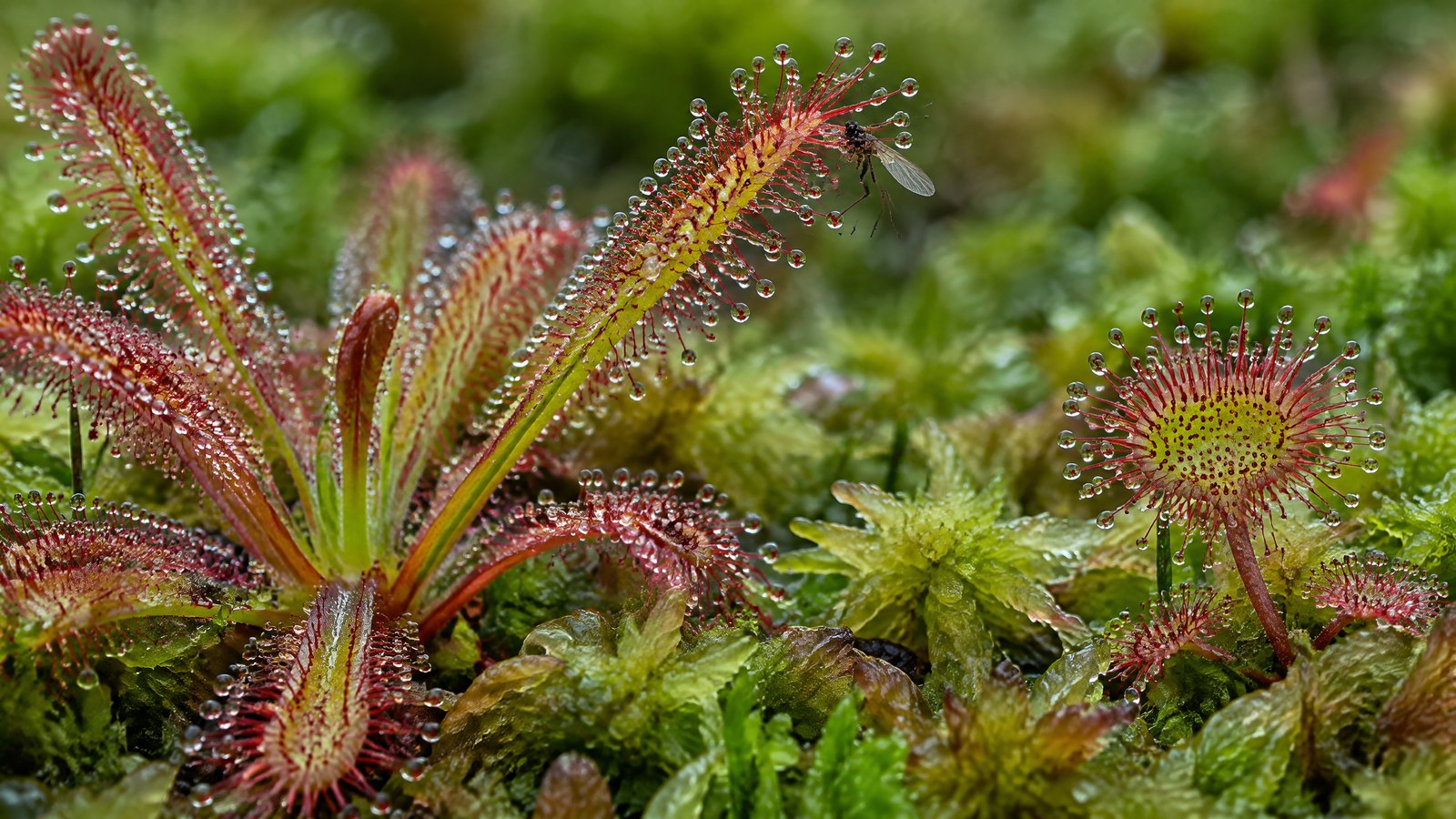
The genus Drosera (derived from the Greek drosos, meaning 'dewdrops') encompasses over 190 species of flypaper carnivores found across the globe. Each leaf blade is populated by dozens of sensitive stalked glands capped with glistening, ruby-tinted droplets of sticky mucilage.
When an insect touches the glue, its struggles trigger adjacent tentacles to curl inward, enveloping the prey in a puddle of digestive proteases.
Ireland possesses a proud native sundew heritage: three distinct species—Drosera rotundifolia (Round-Leaved Sundew), Drosera anglica (Great Sundew), and Drosera intermedia (Oblong-Leaved Sundew)—are native to our bogs and wetlands.
For indoor growers, however, the South African Drosera capensis (Cape Sundew) reigns supreme as the easiest, most rewarding indoor carnivorous plant on the market.
Name the sundew before deciding how to grow it
Sundews look similar at first glance because their leaves use sticky glandular tentacles to catch small invertebrates, but their seasonal needs can differ dramatically. A commonly sold subtropical Drosera capensis is often grown as a warm windowsill plant, while Ireland’s native sundews are peatland plants that follow outdoor seasonal cycles. Do not give all sundews the same winter routine simply because they share the genus name.
For a cultivated subtropical sundew, prioritise good light, low-mineral water and a suitable low-nutrient medium. If a healthy plant loses its “dew”, investigate light, water and recent environmental changes before adding fertiliser or repeatedly feeding it. For a temperate plant, verify that its growing regime includes an appropriate cool rest. The International Carnivorous Plant Society provides group-specific guidance for cultivated subtropical species rather than treating Drosera as one uniform houseplant category.
Irish native sundews belong in their habitats
Ireland has three native sundews: round-leaved, intermediate and long-leaved sundew. Their bog and wetland habitats are vulnerable to drainage, peat cutting and nutrient enrichment. Do not collect plants from the wild or introduce cultivated carnivores into natural sites. Choose responsibly produced nursery plants for cultivation and allow native populations to remain where they grow. Irish Peatland Conservation Council ICPS subtropical Drosera guide
Observation rather than overfeeding
Healthy sundews usually show active new growth and, in suitable conditions, visible mucilage on their tentacles. If the dew is reduced, check whether the plant has recently been moved, shaded, dried or given unsuitable water. Do not respond by fertilising the pot or by repeatedly forcing food onto every leaf. Small naturally caught prey can be enough. Keep any intervention modest and reassess the plant over time, because seasonal change and species identity both matter.
Related Irish growing guides
- Sundews in Ireland — Match the cultivation routine to a named sundew species.
- Butterworts: A Guide for Ireland — Compare Mexican butterwort care with bog-plant care.
- Best Grow Lights for Carnivorous Plants — Evaluate whether your light matches the plant’s response.
Tailoring Sundew Care to Irish Homes and Gardens
To succeed with sundews in Ireland, you must match the species to your cultivation space:
- *For Indoors: Drosera capensis***
- The undisputed champion of indoor windowsills. It thrives at 16°C–22°C room temperatures and does not require cold winter dormancy.
- Stand it in 1–2 cm of clean rainwater on a south- or west-facing windowsill. In winter, supplement with a small LED desk lamp to keep dew production sparkling.
- Highly effective biological predator of fungus gnats (sciarid flies) around indoor houseplants.
- *For Outdoors: Temperate & Native Species (D. rotundifolia, D. filiformis)*
- Must be grown outdoors in full sun. In October, they shed their summer leaves and form a tight, winter-hardy resting bud (hibernaculum) that easily survives Irish frost and ice.
- Conservation Note: Never remove sundews from Irish bogs or wetlands. Choose responsibly sourced, nursery-propagated plants and check current Irish legal guidance and site permissions before handling wild plants. The National Biodiversity Data Centre species record does not itself determine collection law.
Research & sources
These references support the practical and conservation notes on this page.
- International Carnivorous Plant Society — Growing Subtropical Drosera: Care scope for common cultivated subtropical sundews.
- Irish Peatland Conservation Council — Carnivorous Plants: Killers in the Bog: Irish native sundews and peatland habitat context.
- Royal Horticultural Society — How to grow carnivorous plants: Specialist compost, water and dormancy guidance across several carnivorous plant groups.
Common mistakes to avoid
- Placing indoor sundews in low light, causing tentacles to stop producing sticky dew.
- Allowing the potting compost to dry out even once during the summer growing season.
- Mistakenly keeping cold-temperate native sundews warm indoors over winter, skipping their hibernaculum stage.
- Removing wild plants from Irish bogs or wetlands instead of choosing responsibly sourced nursery-propagated plants.