Tropical Pitcher Plants
Nepenthes Species & Hybrids
Vining jungle carnivores with dramatic hanging pitchers, adapted for bright Irish interiors.
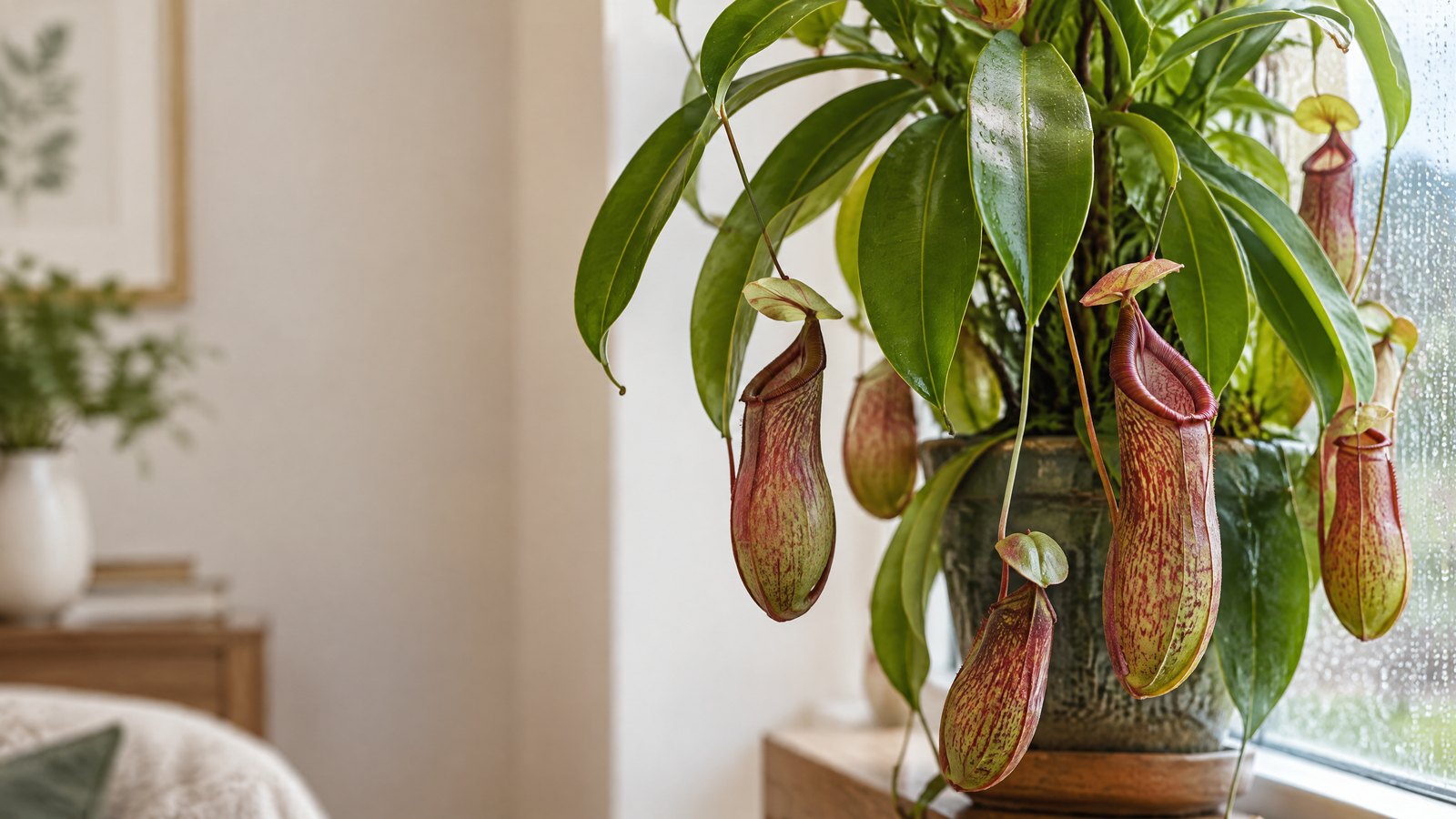
Nepenthes—frequently referred to as monkey cups—are dioecious, climbing or scrambling woody vines native to the tropical forests of Southeast Asia. Their hanging pitchers are formed at the tips of leaf tendrils and feature slippery, recurved rims (peristomes) and fluid-filled digestive reservoirs capable of drowning and consuming wasps, beetles, and, in some species and conditions, larger prey.
In cultivation, Nepenthes are separated into two primary ecological classes:
- Highland Species: Evolving in misty, high-altitude cloud forests, they are generally associated with warmer days and cooler nights, with exact needs varying by species and hybrid.
- Lowland Species: Hailing from hot, steamy coastal swamps, they are generally associated with consistently warm, humid conditions, with exact needs varying by species and hybrid.
For the average Irish home, vigorous highland hybrids (such as Nepenthes × ventrata and Nepenthes 'Gaya') are by far the best choice, as our homes naturally cool down at night when heating turns off.
Let the label shape the care plan
Nepenthes covers a diverse tropical genus. Terms such as lowland, highland and intermediate describe useful temperature tendencies, but they are not complete care instructions. Species and hybrid parentage matter, and many widely sold hybrids are more tolerant than a pure species with narrow habitat requirements. Identify the plant before choosing a terrarium, heat mat or humidity target.
Give the roots an open, freely draining medium and do not leave the pot standing in water. Use low-mineral water and bright, mostly diffused light. If the plant is not making pitchers, work through the basics—light, watering, temperature and recent acclimatisation—before assuming that humidity alone is the cause. A tolerant hybrid may adapt gradually to ordinary household humidity; a tightly sealed enclosure can create heat and airflow problems of its own.
Winter means slower growth, not dormancy
Unlike temperate bog plants, Nepenthes do not need a deliberate winter dormancy. Shorter days and a cooler Irish home can slow growth, but the plant should remain frost-free and its treatment should still suit the named species or hybrid. Use supplementary light or monitored warmth only to solve a measured problem. Clemson Extension and the New England Carnivorous Plant Society both emphasise that cultivation varies by plant and that a terrarium is one option, not a universal requirement. Clemson Extension guide NECPS guide
When a pitcher stops forming
Do not change every condition at once. First check whether the newest leaves receive enough bright, filtered light and whether the pot drains freely after watering. Then consider whether the plant has recently been moved, repotted or exposed to a cold draft. Humidity is relevant, but it is only one part of the picture. A plant often needs time to acclimatise after arrival or relocation, so record changes and allow new leaves to show whether the adjustment helped.
Related Irish growing guides
- Growing Nepenthes in an Irish Home — Explore species-led indoor care and winter conditions.
- Carnivorous Plant Terrariums — Decide whether a ventilated enclosure is actually useful.
- Heat Mats for Carnivorous Plants — Use supplemental warmth only when measurements show it is needed.
Mastering Nepenthes in an Irish Domestic Environment
- Never Sit in Standing Water: Unlike flytraps and sundews, Nepenthes are semi-epiphytic and require copious root aeration. Grow them in an open, airy mix of 50% long-fibre sphagnum moss and 50% horticultural perlite/orchid bark. Water thoroughly from above and discard drainage runoff.
- The Winter Humidity and Light Challenge: Radiators drop indoor relative humidity in winter. Place plants in naturally humid rooms (such as bright bathrooms or kitchens), group them near humidity trays, or use a small room humidifier.
- Winter Supplemental Light: Install a 24W or 36W full-spectrum LED bulb 30 cm above the plant on a 12-hour timer to prevent tendrils from aborting pitchers during dark Irish winter months.
Research & sources
These references support the practical and conservation notes on this page.
- Clemson Cooperative Extension — Tropical Pitcher Plants (Nepenthes spp.): Indoor Care: Temperature, humidity, light and indoor growing choices.
- New England Carnivorous Plant Society — Basic Nepenthes Cultivation: Lowland, highland and hybrid distinctions.
- Carnivero — Nepenthes Care Guide: Hybrid tolerance, drainage and absence of dormancy.
- Royal Horticultural Society — How to grow carnivorous plants: Specialist compost, water and dormancy guidance across several carnivorous plant groups.
Common mistakes to avoid
- Leaving the pot standing in a deep saucer of water, suffocating the root system and causing root rot.
- Using heavy, dense peat moss that compacts around the roots.
- Blaming low humidity when pitchers abort, when the true culprit is insufficient winter light.
- Exposing the plant to sub-10°C drafts from single-glazed windows in winter.