Venus Flytrap Dormancy in Ireland: Everything You Need to Know
Winter dormancy is not optional for Venus flytraps; it is a biological requirement. Learn how to manage the November-February rest period in an Irish climate.
By Bog & Bite · Published 25 September 2026
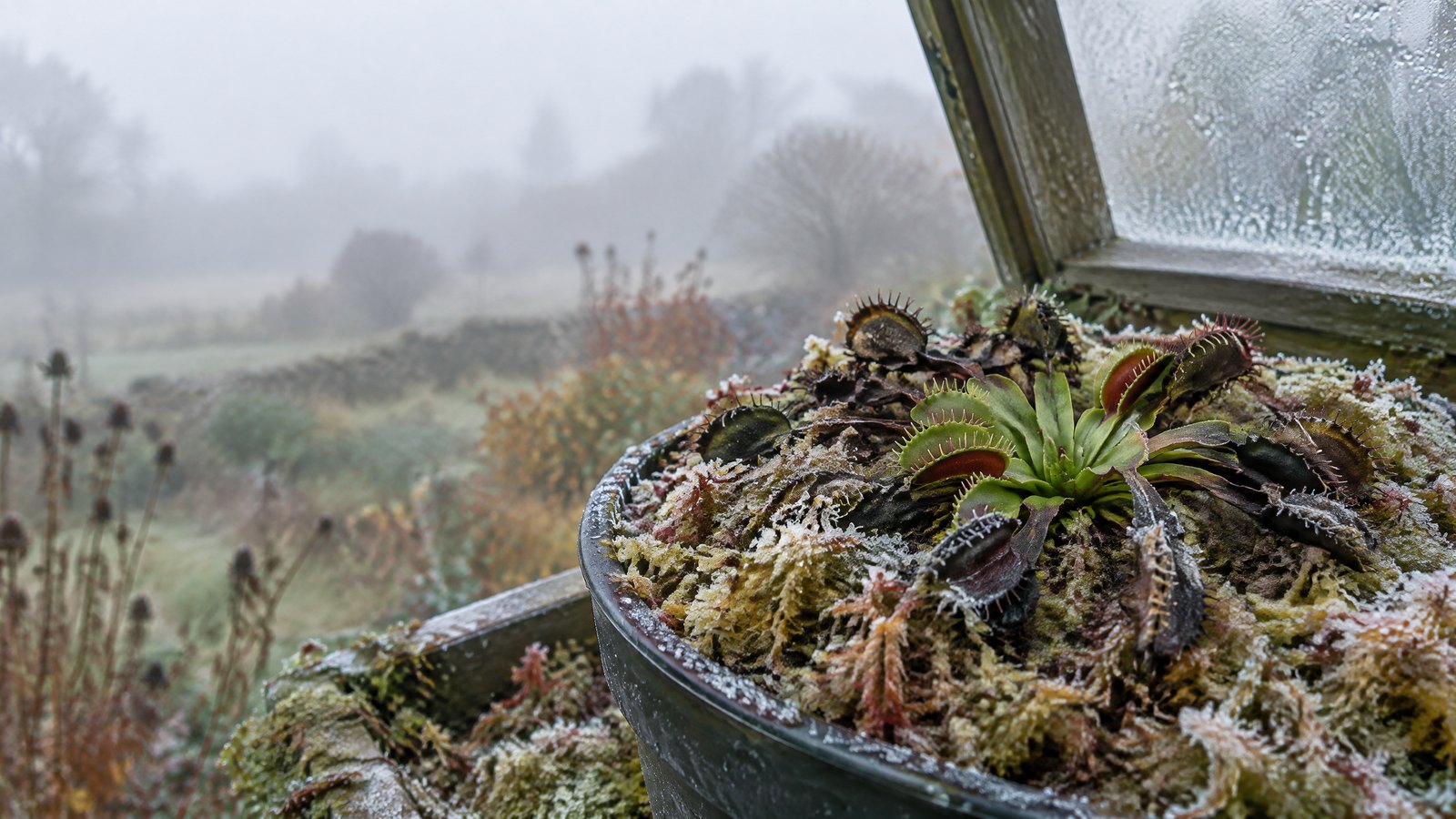
To grow a Venus flytrap (Dionaea muscipula) successfully over many years, you must embrace a fundamental botanical truth: a plant that looks healthy, vibrant, and actively growing on Christmas Day in Ireland is almost certainly a plant on death row.
Venus flytraps are temperate perennial herbs. In their native home in the peat bogs of southeastern North Carolina, winter temperatures regularly dip below freezing, and the sun sinks low on the horizon. Over millennia, the species evolved an obligate physiological dormancy: a period of cellular rest lasting roughly 3 to 4 months between November and February.
Denying a Venus flytrap dormancy by keeping it warm on an Irish living room windowsill is the botanical equivalent of denying a human sleep. For a few months, the plant may seem fine; but by the following spring, its energy reserves are exhausted. It produces tiny, deformed leaves, fails to catch prey, and quietly rots from within.
Here is how to guide your flytraps safely through an Irish winter.
The Triggers: How Dormancy Begins
Dormancy is initiated by two environmental signals working in tandem:
- Photoperiod Reduction: Day length dropping below 10 hours.
- Temperature Decline: Sustained ambient temperatures dropping below 10°C to 12°C.
In Ireland, nature delivers these cues flawlessly between mid-October and early November. As the Atlantic jet stream brings cool winds and cloudy skies, outdoor and unheated porch plants naturally begin shutting down.
What a Dormant Venus Flytrap Looks Like
Many inexperienced growers assume their plant is dying when dormancy strikes:
- Leaf Senescence: The tall, upright summer traps turn black, shrivel, and die back toward the base. This is completely natural. The plant is withdrawing mobile nitrogen and phosphorus back into its underground bulbous rhizome.
- Ground-Hugging Foliage: The few new leaves that emerge in late autumn are short, wide, flat, and lie pressed tightly against the damp moss.
- Sluggish Traps: The traps that remain are small and react with agonising slowness if triggered. (Do not trigger them!).
- The Living Core: Beneath the ring of blackened outer leaves lies a crisp, firm, pearly-white rhizome. As long as this white heart remains solid and firm, your plant is in perfect health.
Environmental Requirements for an Irish Winter
1. Temperature: 2°C to 10°C
The sweet spot for flytrap dormancy is between 2°C and 8°C. At these temperatures, the plant ceases cellular respiration and rests.
- Occasional Frost: Temperatures dropping to -2°C or -4°C overnight will not harm a healthy plant.
- Severe Arctic Outbreaks: If forecasts predict sustained daytime temperatures below -5°C for several days, move pots temporarily into an unheated garage, shed, or porch to prevent the substrate freezing solid to the core.
2. Moisture: Damp, Never Submerged
During the summer heat, flytraps sit in 2–4 cm of standing rainwater. In winter, this standing water tray must be removed.
- Stagnant, freezing water around inactive roots deprives the rhizome of oxygen, encouraging water moulds (Pythium and Phytophthora).
- Keep the potting media lightly moist: if you press a finger into the peat, it should feel cool and damp, but no pool of water should rise around your fingertip.
- Outdoor pots usually receive enough natural drizzle; inspect them every fortnight during dry winter spells and water lightly from above if the top surface feels dry.
3. Light and Airflow
Dormant plants do not need blistering summer sun, but they still benefit from light. An unheated porch window, a cold frame, or an unheated greenhouse shelf provides ideal conditions. Crucially, ensure good air circulation. Stagnant, damp, cold air encourages Botrytis cinerea (grey mould).
Where to Overwinter Your Flytraps in Ireland
- Outdoors (Sheltered Garden / Patio):
- Suitable for coastal, southern, and urban Irish gardens where temperatures rarely plunge below -5°C.
- Group pots together against a south- or east-facing brick wall of the house to benefit from radiant heat.
- Wrap pots in hessian or bubble wrap if severe frost is forecast, or keep them inside a miniature unheated cold frame.
- Unheated Porch or Glasshouse:
- The single best overwintering location. It protects from excessive Atlantic downpours while providing maximum ambient winter daylight and natural cold temperatures.
- Unheated Garage or Utility Room Windowsill:
- Excellent for growers in inland counties (Midlands, Cavan, Monaghan) where winter frosts are more severe.
- The "Fridge Method" (Last Resort):
- If you live in a modern, centrally-heated apartment with zero outdoor space or cold rooms, unpot the dormant plant in November, trim off all dead leaves, rinse the white rhizome in pure water with a touch of fungicide, wrap the roots in barely damp sphagnum moss, seal inside a ziplock bag, and store in the vegetable crisper drawer of your domestic refrigerator (around 4°C) for 10 to 12 weeks.
The Spring Awakening: March and April
As March arrives in Ireland, days lengthen and afternoon sun warms the air:
- Move the plants back into full sun.
- Return pots to their shallow trays and add 1–2 cm of clean rainwater.
- Snip away all remaining dead, crispy black leaves from the previous year.
- Watch for the emergence of fresh green flower scapes and upright summer traps!
Let observations guide the winter plan
There is no universal home-dormancy recipe that fits every flytrap and every Irish growing space. A plant grown outdoors or in a cold greenhouse will experience shortening days and cooler temperatures differently from a plant kept under supplementary lights indoors. The important distinction is between a controlled slow winter rest and an unhealthy plant sitting cold, dark and waterlogged.
As growth slows, reduce feeding and avoid forcing traps to close. Keep the medium lightly moist, maintain drainage and check the crown periodically. If a small pot is exposed to a sharp freeze, protect the root zone or move it to a cold protected area; do not move it into a warm dark room. Expert sources differ on whether indoor plants need a formal dormancy period, so this guide avoids presenting an exact date or refrigerator method as compulsory. NYBG flytrap care ICPS flytrap guide
Continue learning
- Can Venus Flytraps Live Outside in Ireland? — Choose a sheltered outdoor or protected cool position.
- Why Is My Venus Flytrap Dying? — Use plant condition to distinguish rest from rot.
- Feeding a Venus Flytrap — Avoid feeding a plant that is entering a slow winter phase.
Research & sources
These references support the practical and conservation notes on this page.
- U.S. Fish & Wildlife Service — Venus Fly Trap (Dionaea muscipula): Native habitat and the role of insects as a nutrient source.
- International Carnivorous Plant Society — Growing Dionaea muscipula: Light, water, feeding, outdoor culture and condition-led repotting.
- New York Botanical Garden — Venus Flytrap Houseplants: Black traps, safe manual feeding, water and repotting.
- Royal Horticultural Society — How to care for your Venus fly trap: Spring repotting, winter rest and why repeated empty closures are unhelpful.
Frequently Asked Questions
What happens if a Venus flytrap is denied winter dormancy?
If kept warm and under domestic lighting for multiple consecutive winters, the underground rhizome steadily depletes its carbohydrate reserves. The plant exhibits increasingly weak, spindly growth in spring and typically dies within 18 to 24 months.
Can I leave my flytrap outside all winter in Ireland?
In most coastal and lowland regions of Ireland, yes—provided the container is large enough (20cm+ diameter) to insulate roots from deep freezing, and the pot is removed from standing water trays so it stays damp rather than waterlogged.
What should I do if mould appears on dead winter leaves?
Immediately prune away the mouldy, blackened tissue using clean scissors, improve ventilation around the plant, and move it to a brighter, slightly drier spot. Avoid closed, humid containers during dormancy.