Can Venus Flytraps Live Outside in Ireland?
Contrary to widespread myth, Venus flytraps are not delicate tropical houseplants. Here is why outdoor cultivation in Ireland often produces healthier, redder plants than indoor windowsills.
By Bog & Bite · Published 25 September 2026
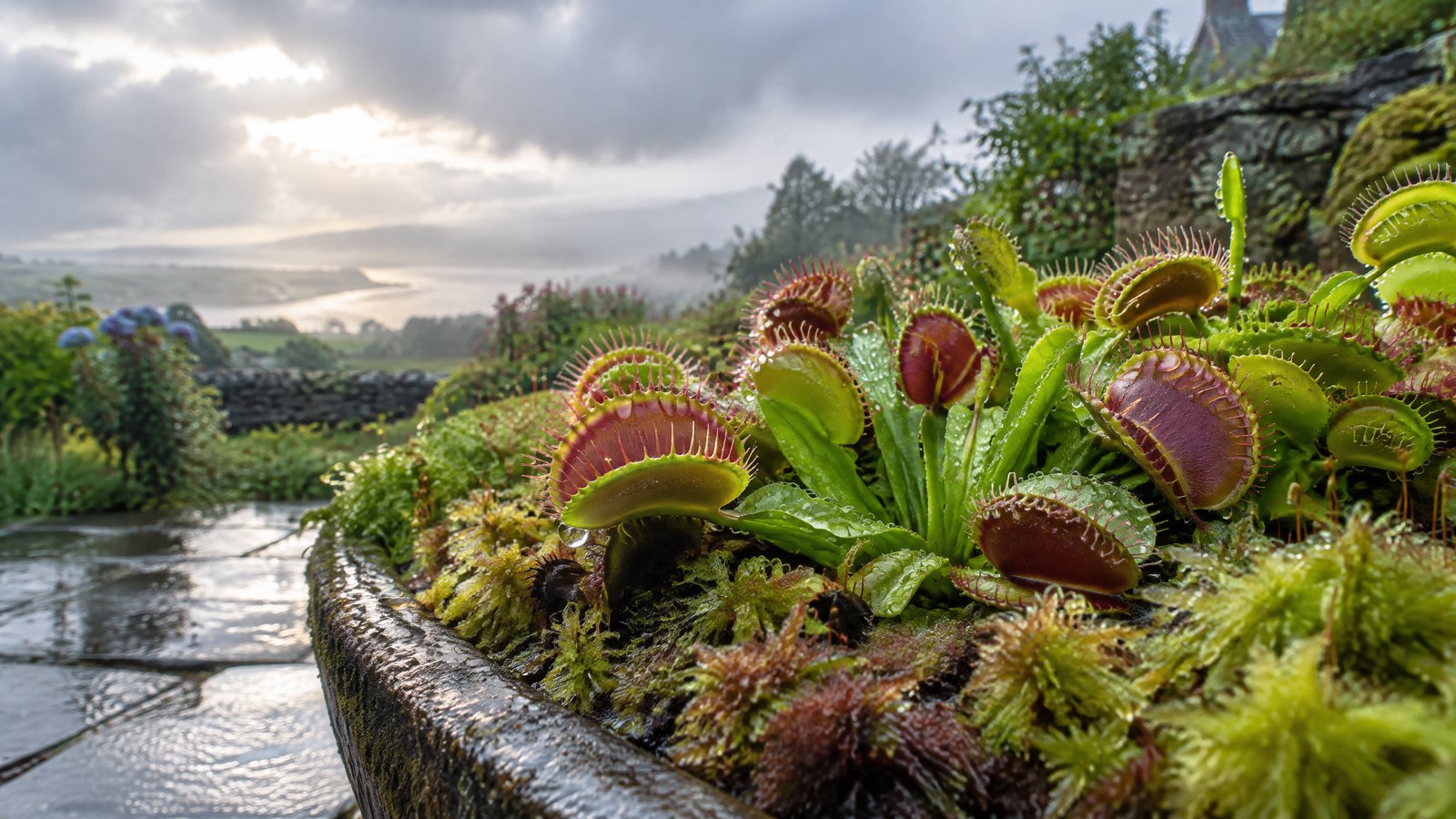
One of the most persistent misconceptions in British and Irish gardening is that Dionaea muscipula (the Venus flytrap) is a fragile tropical jungle plant that must be sheltered inside a glass terrarium or kept on a warm, humid bathroom shelf.
In fact, the opposite is true. The coastal coastal plain of North and South Carolina, where the species evolved, experiences a temperate, seasonal climate. Summers are hot and intensely sunny; winters are damp, crisp, and regularly touch freezing temperatures.
When you place a Venus flytrap on an Irish windowsill behind double-glazed low-emissivity glass, you deprive it of the intense UV rays it needs to synthesise red digestive anthocyanin pigments and fuel rapid trap closure. In winter, central heating keeps the plant unnaturally warm while Irish daylight shrinks to just seven or eight hours of weak twilight.
Growing Venus flytraps outdoors in Ireland is not only entirely feasible—for many growers, it produces sturdier, healthier, and significantly more colourful specimens than indoor culture ever could.
The Advantages of Outdoor Cultivation in Ireland
- Full-Spectrum Natural Sunlight: Glass filters out crucial ultraviolet wavelengths. Outdoors, your plants receive unfiltered UV radiation, triggering vivid crimson coloration inside the trap lobes and producing short, robust, ground-hugging spring petioles rather than long, floppy, pale green leaves.
- Abundant Natural Prey: An outdoor plant in an Irish garden or on a sunny balcony will capture dozens of flies, wasps, craneflies, and spiders between May and September without any supplemental feeding from you.
- Automatic Winter Dormancy: Outdoor plants naturally sense the gradual shortening of autumn days and dropping temperatures. They transition smoothly into dormancy, storing energy in their underground rhizome ready for explosive spring growth.
- Superior Air Circulation: Stagnant indoor air combined with damp peat is an open invitation for grey mould (Botrytis cinerea). Outdoor breezes maintain excellent aeration around the plant crown.
Understanding the Irish Winter Challenge
While Irish summers (averaging 17–22°C) are cooler than those in North Carolina, flytraps adapt to them readily. The primary challenge lies in our maritime winter conditions.
In their native habitat, winters are relatively dry and cold. In Ireland, winters are wet, dark, and subject to Atlantic storm fronts alternating rapidly between mild 12°C drizzle and sharp sub-zero night frosts.
1. Wet Cold vs Dry Cold
A dormant flytrap rhizome can comfortably endure temperatures of -5°C if the substrate is merely moist. However, if the rhizome is sitting in a deep tray of stagnant, freezing water for three consecutive months of overcast weather, the lack of oxygen around the roots combined with cold-tolerant pathogens can induce fungal crown rot.
The Solution: In early November, remove the pots from their standing water trays. Ensure the drainage holes are open. The natural Irish winter rainfall will keep the peat sufficiently damp. The goal in winter is moist compost, never a flooded swamp.
2. The Danger of Small Plastic Pots
A standard 7 cm or 9 cm nursery pot has virtually no thermal mass. During a sudden arctic blast, the substrate can freeze solid all the way through to the core in a single night. While brief freezing rarely kills a flytrap, repeated freeze-thaw cycles shear fine root hairs and desiccate the crown.
The Solution: Use larger containers. A pot with a minimum diameter of 20 cm and a depth of 15–20 cm provides substantial thermal buffering. Even better is a miniature outdoor bog garden built in an unpunched whiskey barrel, Belfast sink, or plastic trough.
Practical Outdoor Growing Calendar for Ireland
- Late March – April: Growth resumes. Move plants into the sunniest spot in the garden (ideally south-facing, sheltered from prevailing south-westerly gales). Place pots in shallow trays filled with 1–2 cm of clean rainwater.
- May – August: Peak growing season. Maintain 2–4 cm of standing rainwater in the trays at all times. The plants will produce tall flower scapes (which beginners should cut off at 5 cm high to divert energy back into trap production).
- September – October: Traps begin to hug the ground closer. Traps blacken faster after digestion. Stop adding water to trays; allow autumnal rain to take over.
- November – February (Winter Dormancy): Remove trays entirely. Place pots on gravel or slatted benches to drain excess rain. In western and northern counties subject to severe frost, move pots against the sheltered south wall of the house, into an unheated cold frame, or under an open-sided glass porch.
Wind Protection on the Atlantic Coast
Ireland is notoriously windy. While flytraps do not have tall foliage that snaps easily, strong Atlantic gales can whip windborne salt spray into coastal gardens and knock over lightweight plastic containers.
Always weigh your pots down by placing washed quartz stones at the base of the container, or nest your pots inside heavier decorative terracotta or stone planters. Ensure the site receives full overhead sun while offering baffle protection from prevailing south-westerly winds.
If you give a Venus flytrap full Irish sunshine and respect its need for a cool, damp winter rest, you will discover that this celebrated carnivore is tough, resilient, and perfectly capable of thriving in our emerald climate.
A site-led outdoor decision
Outdoor growing can be a good route for a flytrap, but it is not a guarantee that every exposed garden will work without intervention. Before leaving a plant out through winter, assess three things: how much direct light reaches the growing point, whether wind can repeatedly dry or overturn the pot, and how the container behaves in a hard freeze. A large, stable pot or protected bog-style container changes those risks considerably.
Use the plant’s condition and the forecast rather than a rigid calendar. During active growth, keep the medium consistently moist with low-mineral water. As conditions cool, avoid leaving a small pot in deep stagnant water. During unusually severe frost, move a container to a protected cold but bright place or add insulation around the pot. The International Carnivorous Plant Society describes outdoor flytrap culture as possible but weather-dependent, and recommends protection from winter cold and freeze-drying where needed. ICPS flytrap guide
Continue learning
- Venus Flytrap Dormancy in Ireland — Plan a winter rest around the plant and the weather forecast.
- How to Repot a Venus Flytrap — Choose a suitably sized container and fresh low-nutrient medium.
- Water for Carnivorous Plants — Check water quality before relying on a tray system.
Research & sources
These references support the practical and conservation notes on this page.
- U.S. Fish & Wildlife Service — Venus Fly Trap (Dionaea muscipula): Native habitat and the role of insects as a nutrient source.
- International Carnivorous Plant Society — Growing Dionaea muscipula: Light, water, feeding, outdoor culture and condition-led repotting.
- New York Botanical Garden — Venus Flytrap Houseplants: Black traps, safe manual feeding, water and repotting.
- Royal Horticultural Society — How to care for your Venus fly trap: Spring repotting, winter rest and why repeated empty closures are unhelpful.
Frequently Asked Questions
Will a hard Irish frost kill an outdoor Venus flytrap?
Light frosts down to -2°C to -4°C are completely harmless to healthy, dormant flytraps. However, prolonged freeze-thaw cycles in very small pots can cause root damage. Growing them in large containers or mini-bogs insulates the rhizome against deep freezing.
Can flytraps stay outside during relentless winter rain in Ireland?
While flytraps love water during the warm summer growing season, a completely submerged, cold rhizome in December can succumb to fungal rot. Ensure the pot has drainage holes and lower the water level in the tray so the soil remains damp rather than flooded during winter.
Do outdoor flytraps catch enough food in Ireland?
Far more than they ever would indoors! From May to September, outdoor flytraps in Ireland capture spiders, wasps, bluebottles, and hoverflies without any human intervention whatsoever.