Why Is My Venus Flytrap Dying? A Diagnostic Guide
Black traps? Pale drooping leaves? Mushy rhizome? Use this systematic diagnostic troubleshooting guide to identify and fix the real problem before it is too late.
By Bog & Bite · Published 25 September 2026
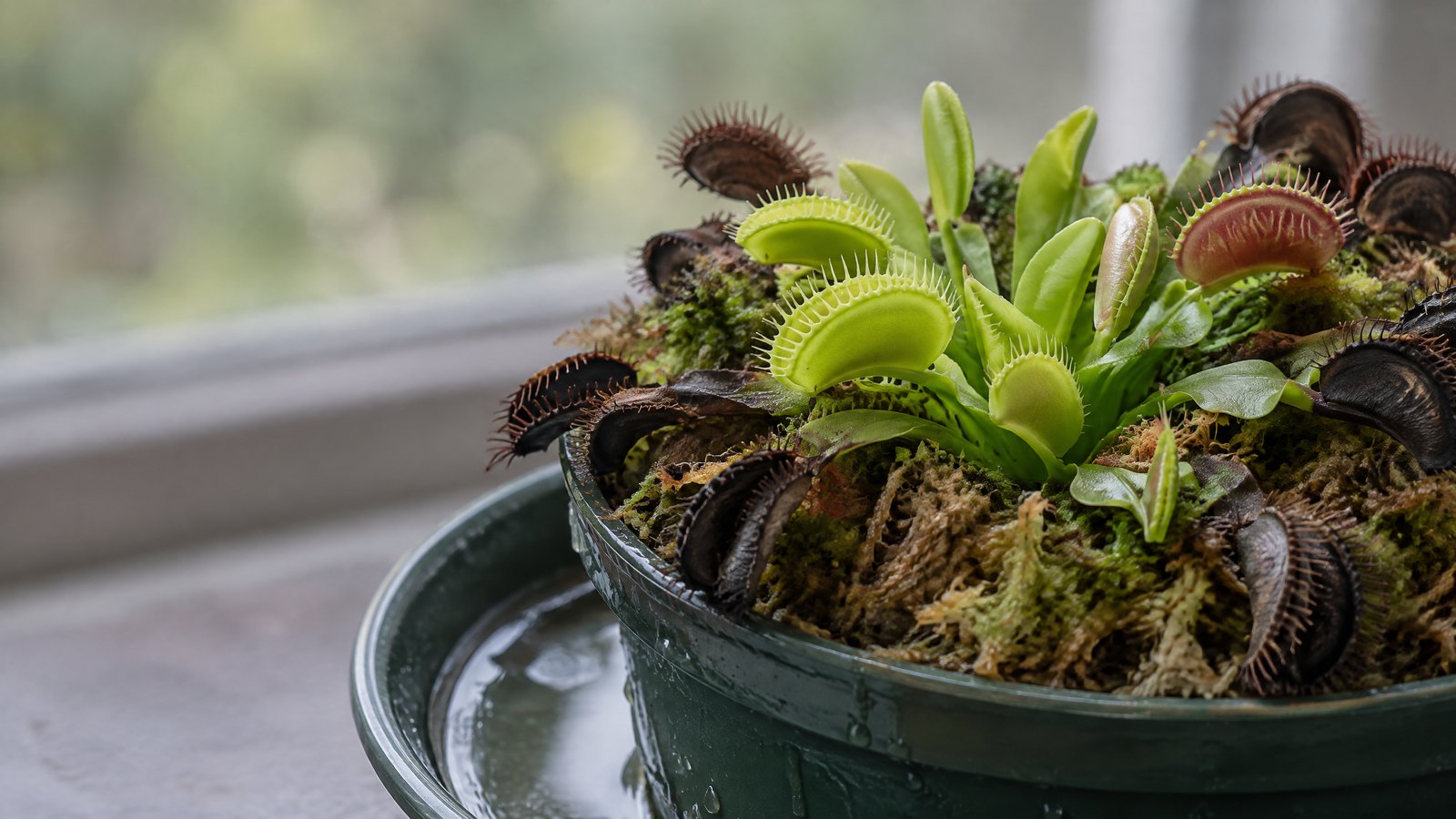
Few sights cause as much panic in a beginner plant parent as a Venus flytrap rapidly turning black, limp, or stunted. Because carnivorous plants have a reputation for being exotic and difficult, owners often jump to the wrong conclusion—mistakenly adding fertiliser, repotting into rich compost, or moving the plant into a dark closet, thereby administering the coup de grâce to an already stressed plant.
In nearly ninety percent of cases, a declining flytrap is suffering from one of four classic environmental mismatches: mineral toxicity from tap water, severe light starvation, inappropriate potting compost, or a misunderstood winter dormancy cycle.
Use the systematic diagnostic sequence below to identify precisely what is going wrong with your plant.
Symptom 1: Individual Traps Turning Pitch Black
The Diagnosis
Before panicking, check which traps are blackening:
- Natural Trap Turnover: Are the blackening traps on the outside edge of the rosette, while the central heart is producing fresh green spearheads? If so, your plant is entirely healthy. Traps are modified leaves with finite lifespans. After closing and digesting, or after repeated empty closures, the trap naturally senesces, turning black from the cilia inward as the plant withdraws mobile nutrients.
- Failed Seal During Digestion: Did the trap catch a large insect whose legs or wings prevented an airtight closure? If bacteria from the outside air enter the digestive pouch, the insect decomposes aerobically, turning the trap black.
- Action Required: Do nothing until the leaf is completely dry and crispy black. Then, use clean, sterilised scissors to snip it off at the base. Never pull forcefully on a dying leaf, as tearing the green rhizome tissue creates an entry wound for fungus.
Symptom 2: Wide, Flattened Leaves with Miniature, Inactive Traps
The Diagnosis: Severe Light Starvation (Etiolation)
If your flytrap is producing long, broad, floppy green leaf stems (petioles) with tiny, pinhead-sized traps that lack any internal pink or red hue, the plant is desperately crying out for light. In low light, the plant broadens its photosynthetic foliage to capture whatever stray photons it can find, sacrificing energy-hungry carnivorous traps in the process.
- Typical Environment: Placed in the interior of a room, on a north-facing windowsill, or under standard domestic ceiling lighting.
- Action Required: Gradually acclimate the plant to higher light levels. Do not place a shade-adapted plant directly into scorching midday sun outdoors immediately, or the leaves will suffer solar bleaching. Move it to an east-facing window for a week, then a south-facing windowsill, or outdoors under dappled shade before exposing it to full sun.
Symptom 3: The Entire Plant is Collapsing into Brown Slime (Rhizome Rot)
The Diagnosis: Fungal Crown Rot (Botrytis / Pythium)
If the central growth point turns greyish-brown and mushy, and traps pull away effortlessly with a foul smell, the underground rhizome has succumbed to rot.
- Root Causes:
- Kept in standing water during cold winter temperatures with stagnant indoor air.
- Potted too deeply, burying the green heart of the rosette beneath wet peat.
- Crown damaged during rough repotting.
- Action Required: Unpot the plant immediately. Wash away all substrate in clean rainwater. Inspect the underground rhizome. The rhizome should look like a firm white clove of garlic. If any firm white tissue remains, carefully carve away all brown mushy rot using a sterilised scalpel or razor blade. Dust the clean cut with sulfur powder or rinse with an appropriate diluted fungicide, and replant into fresh, barely damp 50/50 peat-perlite. Place in a bright, well-ventilated location.
Symptom 4: White Crust on Pot Rim, Browning Leaf Tips, General Stunting
The Diagnosis: Mineral Toxicity (TDS Poisoning)
Carnivorous plants evolved in nutrient-deprived bogs where their roots adapted to absorb zero mineral salts. When watered with typical Irish hard tap water, minerals (calcium carbonate, magnesium, sodium) bind to the peat fibres and accumulate around the root zone.
Mineral accumulation in the medium can stress sensitive roots. TDS is a useful screening measurement, but it does not identify the dissolved substances or predict a fixed failure point for every plant.
- Visual Clues: A chalky white or yellowish crystalline crust forming on the terracotta or plastic rim; leaf tips turning black while still young; new traps aborting before fully forming.
- Action Required:
- Stop using tap water immediately.
- Flush the pot thoroughly from the top with at least three times the pot's volume of pure rainwater or distilled water.
- If tap water has been used for more than two months, discard the old compost entirely, gently wash the root system in pure water, and repot into virgin, unfertilised sphagnum peat and perlite.
Symptom 5: Complete Autumn Collapse (The "Is It Dead?" Test)
The Diagnosis: Winter Dormancy
Between October and November in Ireland, day lengths contract dramatically and temperatures fall. In response, a healthy Venus flytrap sheds its tall summer foliage. The traps turn black one after another, and the plant shrinks down to a tiny, tight rosette of ground-hugging leaves with almost dormant traps.
Many beginners throw their flytrap in the compost bin in November, believing they have killed it!
- How to Test: Gently clear away the dead outer foliage and inspect the centre of the crown. If you see a tight, firm, pale greenish-white core at soil level, your plant is not dead—it is sleeping.
- Action Required: Respect the rest period. Reduce watering so the compost is cool and damp rather than soaking wet. Keep the plant in an unheated room, porch, greenhouse, or sheltered outdoor spot between 2°C and 10°C until March, when warm spring sun will trigger vigorous new growth.
Diagnostic Summary Matrix
| Observed Symptom | Primary Cause | Immediate Remedy |
|---|---|---|
| Old outer traps turning black | Natural leaf senescence | Trim off when fully dry; leave green centre alone |
| Wide green stems, tiny pale traps | Insufficient light intensity | Move to south windowsill or outdoors; consider LED grow light |
| Brown mush at soil level, foul smell | Crown rot from stagnant water | Carve out rot; repot into fresh airy media; increase ventilation |
| Leaf tips browning, white crust on soil | Mineral burn from hard tap water | Flush thoroughly with rainwater; repot into virgin peat mix |
| Shinking rosette in late October/Nov | Normal winter dormancy | Reduce water; maintain cold temperatures (2–10°C); wait for spring |
| Traps closing slowly or failing to shut | Weak light or cold temperatures | Move to warmer sunny spot; do not trigger traps manually |
Use a one-change-at-a-time recovery plan
When a flytrap declines, changing everything on the same afternoon can make the diagnosis harder. First remove only fully black, dry leaves. Then check the growing point, the moisture level, the pot drainage and the light position. If the centre remains firm and new leaves are forming, give the plant time to respond to one measured improvement rather than feeding it, fertilising it and repotting it simultaneously.
If mineral build-up is suspected, switch to rainwater, distilled water or reverse-osmosis water and consider refreshing the medium if it is old, compacted or visibly crusted. If the plant is entering a cool seasonal rest, a reduction in leaf size and activity can be expected; persistent mushiness at the crown is different and needs prompt attention. A black trap alone is not a diagnosis. NYBG notes that individual traps naturally blacken after their lifespan, while a healthy plant continues to replace them. NYBG flytrap care
Continue learning
- Venus Flytrap Dormancy in Ireland — Separate seasonal die-back from a persistent care problem.
- How to Repot a Venus Flytrap — Refresh compacted or mineral-affected growing medium.
- Feeding a Venus Flytrap — Avoid unnecessary empty closures and overfeeding.
Research & sources
These references support the practical and conservation notes on this page.
- U.S. Fish & Wildlife Service — Venus Fly Trap (Dionaea muscipula): Native habitat and the role of insects as a nutrient source.
- International Carnivorous Plant Society — Growing Dionaea muscipula: Light, water, feeding, outdoor culture and condition-led repotting.
- New York Botanical Garden — Venus Flytrap Houseplants: Black traps, safe manual feeding, water and repotting.
- Royal Horticultural Society — How to care for your Venus fly trap: Spring repotting, winter rest and why repeated empty closures are unhelpful.
Frequently Asked Questions
Is my flytrap dead if all the traps have turned black in November?
Probably not! Venus flytraps are herbaceous perennials that naturally enter dormancy during late autumn. Most or all summer leaves die back to an underground white bulb-like rhizome. If the center of the rhizome is firm and white/pale green, the plant is alive and resting.
Can I save a flytrap that was watered with Irish tap water?
Yes, if caught early. Immediately flush the pot thoroughly from above with generous amounts of pure rainwater or distilled water to leach out accumulated calcium and magnesium salts. Repotting into fresh peat/perlite mix is recommended if tap water was used for months.
Why did a trap turn completely black after eating a fly?
Each individual trap can only snap and digest 3 to 5 times before reaching the end of its biological lifespan. Furthermore, if the insect was too large and wings or legs protruded from the seal, bacteria cause the trap to rot. This is completely normal and does not harm the wider plant.