Best Carnivorous Plants for Beginners in Ireland
Not all carnivorous plants are equal candidates for an Irish windowsill or patio. Here is how to choose species that genuinely thrive in cool maritime conditions.
By Bog & Bite · Published 25 September 2026
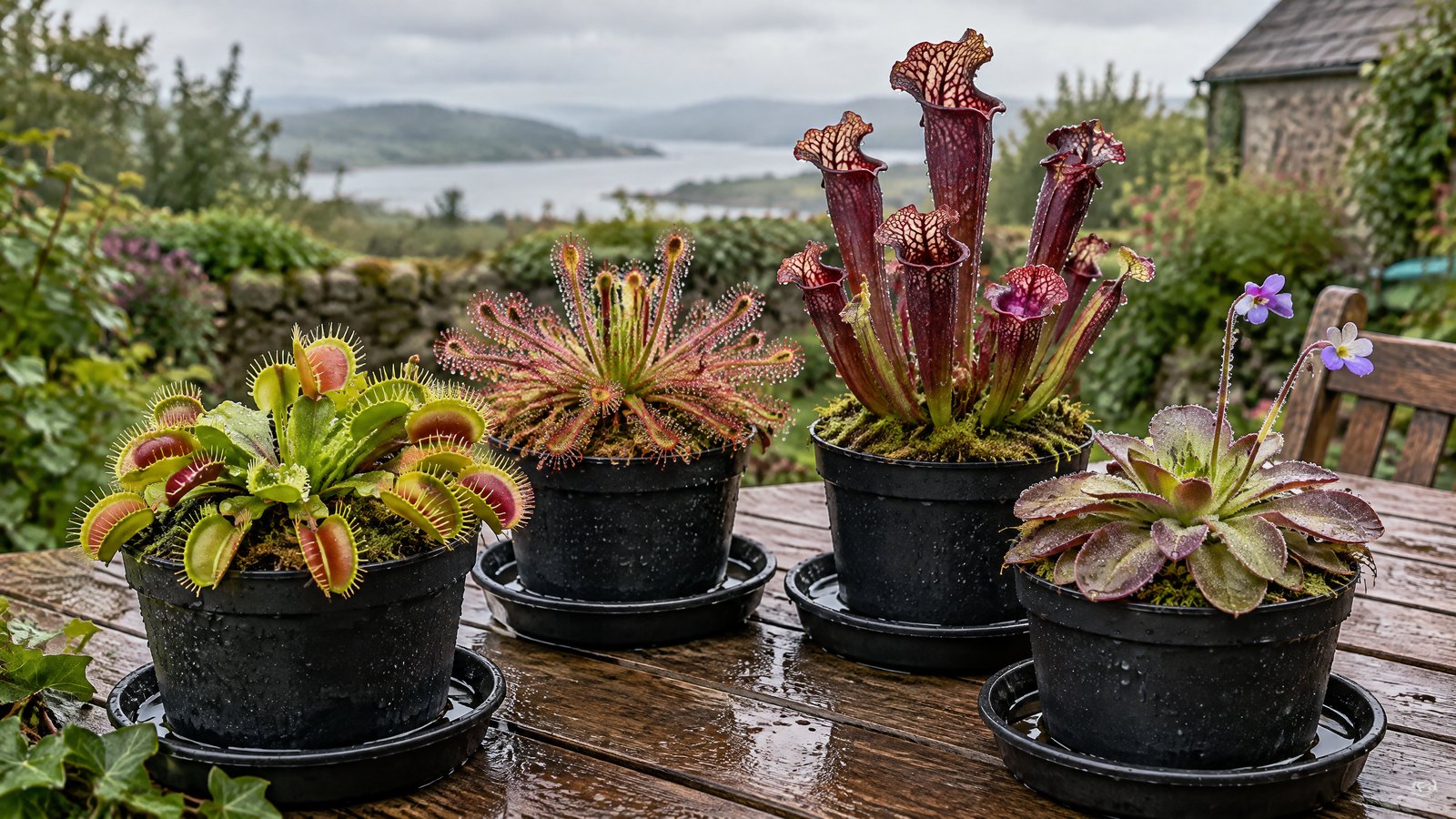
The temptation for anyone fascinated by botanical carnivory is to walk into an Irish garden centre or supermarket, pick up a small plastic pot containing a juvenile Dionaea muscipula (Venus flytrap), and place it proudly on a desk or bedside table. Within four to six weeks, the traps blacken, new leaves emerge thin and pale, and the grower concludes that carnivorous plants are impossibly finicky divas unsuited to human care.
In reality, the plant did not die because it was fragile; it died because generic houseplant advice is catastrophic for bog specialists, and because different carnivorous genera belong to entirely distinct climatic regimes.
Growing carnivorous plants in Ireland is immensely rewarding, provided you match the plant’s evolutionary origins to your actual growing environment. Ireland’s oceanic climate features mild, damp winters with temperatures seldom dropping below -4°C along the coast, cool summers rarely exceeding 24°C, frequent precipitation, and drastically reduced photoperiods from November to February.
To succeed right from day one, you must recognise that “carnivorous plants” is an ecological classification, not a horticultural care group.
1. The Undisputed Beginner Champion: Drosera capensis (Cape Sundew)
If you have never grown a carnivorous plant before, begin with Drosera capensis. Originating from the Cape region of South Africa, this sundew is virtually indestructible compared to its peers.
- Ideal Location: An unobstructed south- or west-facing indoor windowsill.
- Winter Strategy: Kept indoors as a continuous evergreen grower; does not require cold winter dormancy.
- Water Needs: Standing permanently in 1–2 cm of pure rainwater or reverse osmosis water (the tray method).
- Why it excels in Ireland: Our homes maintain moderate temperatures (16–21°C) that Drosera capensis finds perfectly comfortable. As long as it receives direct sunlight, its tentacled leaves produce glistening droplets of mucilage that sparkle brilliantly in morning light. Furthermore, it is an exceptionally effective predator of fungus gnats (Bradysia species) that frequently plague Irish indoor houseplant collections.
2. The Ideal Outdoor Plant: Sarracenia purpurea subsp. purpurea (Northern Purple Pitcher)
Many beginners assume carnivorous plants must be pampered indoors like delicate tropical orchids. In fact, several North American pitcher plants find the Irish climate far closer to home than a stuffy central-heated flat.
Sarracenia purpurea subsp. purpurea originates from peat bogs stretching across Canada and the northern United States. It has been introduced to some Irish peat bogs, including at Termonbarry in Co. Roscommon. That history does not make it native or appropriate for release: keep cultivated pitcher plants contained and out of natural bogs and wetlands.
- Ideal Location: Outdoors year-round in full, unfiltered sun—either in a heavy patio pot or a garden mini-bog.
- Winter Strategy: Full outdoor exposure. It is among the hardier pitcher plants, but a container still benefits from suitable drainage and attention during unusually severe cold spells.
- Trap Mechanism: Unlike upright trumpet pitchers that produce digestive enzymes along tall tubes, the squat, tubby pitchers of S. purpurea collect rainwater. Captured insects drown in this pool, where bacterial communities assist the plant in mineral absorption.
- Why it excels in Ireland: Natural rainfall can help outdoors, but container drainage and the condition of the medium still need checking in a wet winter.
3. The Iconic Species: Dionaea muscipula (Venus Flytrap)
Everyone wants a Venus flytrap, and there is no reason you should not grow one—provided you treat it as a temperate perennial, not a tropical houseplant.
Originating exclusively from a tiny 100-mile coastal radius around Wilmington, North Carolina, Dionaea experiences warm, humid summers and crisp, chilly winters with light frosts.
- The Indoor Trap: If you keep a Venus flytrap in a warm, dimly lit Irish living room through November and December, it continues trying to photosynthesise without adequate light. Deprived of the cooling signal that triggers winter dormancy, the underground rhizome slowly exhausts its carbohydrate reserves and rots.
- The Irish Solution: Grow your flytrap outdoors from April to October in full sun, or in an unheated greenhouse, porch, or cold frame. Allow it to experience the natural temperature drop in November. When growth slows and the outer leaves blacken, move it to an unheated frost-free shed, porch, or cold garage windowsill, keeping the compost barely damp rather than waterlogged.
4. The Windowsill Orchid-Substitute: Mexican Pinguicula (Butterworts)
If your indoor space lacks the intense direct sunlight required by sundews, Mexican butterworts such as Pinguicula moranensis, P. esseriana, or the hybrid P. 'Tina' are magnificent companions.
Mexican butterworts grow on limestone cliffs and mossy banks in Central America. They feature soft, succulent rosettes covered in microscopic glandular hairs that feel greasy to the touch—hence the common name.
- Indoor Tolerance: They thrive in bright, indirect light or morning sun on an east-facing windowsill, making them much easier to accommodate in typical Irish homes.
- Winter Heterophylly: In winter, triggered by shorter days and drier compost, Mexican Pinguicula shed their carnivorous summer leaves and form a tight rosette of succulent, non-carnivorous winter leaves. During this phase, you reduce watering to an absolute minimum, preventing the root rot that plagues other species.
- Flowers: They produce delightful violet, pink, or white flowers that resemble miniature orchids, lasting for weeks in early spring.
5. Why You Should Think Twice Before Buying a Nepenthes First
Tropical pitcher plants (Nepenthes) look spectacular in garden centres, with their dramatic pendulous pitchers hanging from leaf tips. However, they are among the most frequently murdered plants in Irish homes.
Nepenthes are divided into lowland species (often associated with consistently warm conditions and higher humidity, with substantial variation between species and hybrids) and highland species (requiring warm days and a sharp nightly temperature drop to 10–13°C).
In an average centrally-heated Irish home in November:
- Radiators desiccate the ambient air, dropping relative humidity to 35–45%.
- Daylight drops to less than 8 hours of weak, overcast sky.
- The plant stops producing pitchers entirely; the tendrils simply wither and brown at the tips.
While vigorous hybrids like Nepenthes × ventrata can adapt to bright Irish kitchens or warm bathrooms with supplemental LED lighting, they are not forgiving first-choice plants for total beginners without environmental controls.
Summary Checklist for Irish Beginners
| Plant Species | Native Habitat | Growing Site in Ireland | Winter Dormancy? | Difficulty |
|---|---|---|---|---|
| Drosera capensis | South Africa | Sunny indoor windowsill | No (Keep warm & wet) | Extremely Easy |
| Sarracenia purpurea | North American Bogs | Outdoors in full sun | Yes (Frost hardy outside) | Very Easy |
| Dionaea muscipula | Carolinas, USA | Outdoors / Cold greenhouse | Yes (Must have cold winter) | Moderate |
| Pinguicula 'Tina' | Mexican hybrid | Bright indoor windowsill | Semi-dormant (Dry rosette) | Easy |
| Nepenthes × ventrata | Tropical hybrid | Heated indoor space + high light | No (Needs warm winter) | Moderate to Hard |
By aligning your plant selection with your actual growing setup—reserving outdoor pots for hardy North American natives and bright windowsills for South African sundews—you will avoid the disappointment that so many beginners face, cultivating vigorous, insect-snaring plants that thrive year after year.
Choose the environment before the species
A successful first plant is not simply the one with the most dramatic trap. It is the plant whose basic needs already match a place you have available. Start by writing down where the plant will live, how much direct light it receives in midsummer and winter, whether you can collect or buy low-mineral water, and whether you can give a temperate plant a cooler winter rest. That simple inventory avoids the common mistake of buying a plant first and trying to retrofit unsuitable conditions later.
For a bright indoor windowsill, a commonly grown subtropical sundew or a Mexican butterwort may be more realistic than a flytrap. For a sunny outdoor container, a temperate bog plant can be rewarding, but it needs contained cultivation, suitable water and winter drainage. Tropical Nepenthes hybrids can suit a bright indoor position, but their care is not interchangeable with flytrap care. The RHS and the International Carnivorous Plant Society both stress that light, low-nutrient medium and water are core conditions; insects supplement nutrition rather than replacing light. RHS growing guide U.S. Fish & Wildlife Service
Continue learning
- Can Venus Flytraps Live Outside in Ireland? — See how a sheltered outdoor setup changes light and winter care.
- Why Is My Venus Flytrap Dying? — Use a symptom-led check before changing several conditions at once.
- The Complete Guide to Water — Start with the water and medium fundamentals shared by many bog plants.
Research & sources
These references support the practical and conservation notes on this page.
- U.S. Fish & Wildlife Service — Venus Fly Trap (Dionaea muscipula): Native habitat and the role of insects as a nutrient source.
- International Carnivorous Plant Society — Growing Dionaea muscipula: Light, water, feeding, outdoor culture and condition-led repotting.
- New York Botanical Garden — Venus Flytrap Houseplants: Black traps, safe manual feeding, water and repotting.
- Royal Horticultural Society — How to care for your Venus fly trap: Spring repotting, winter rest and why repeated empty closures are unhelpful.
Frequently Asked Questions
What is the single easiest carnivorous plant for an Irish beginner?
Drosera capensis (the Cape Sundew). It tolerates indoor temperatures year-round, dews readily on sunny south-facing windowsills, and forgives minor beginner mistakes far better than Venus flytraps.
Can I keep my first carnivorous plant in the living room?
Yes, if it is a subtropical sundew (like Drosera capensis) or a Mexican Pinguicula on a bright windowsill. Temperate plants like Venus flytraps and Sarracenia usually suffer indoors during winter because they miss their mandatory cold dormancy.
Do beginners need an expensive grow light in Ireland?
Not for outdoor temperate bogs or sunny south-facing windows in summer. However, supplemental LED lighting is invaluable in Irish homes between November and February for non-dormant indoor plants.