Venus Flytraps
Dionaea muscipula
The world's most famous botanical snap-trap, built for temperate bogs and cool Irish winters.
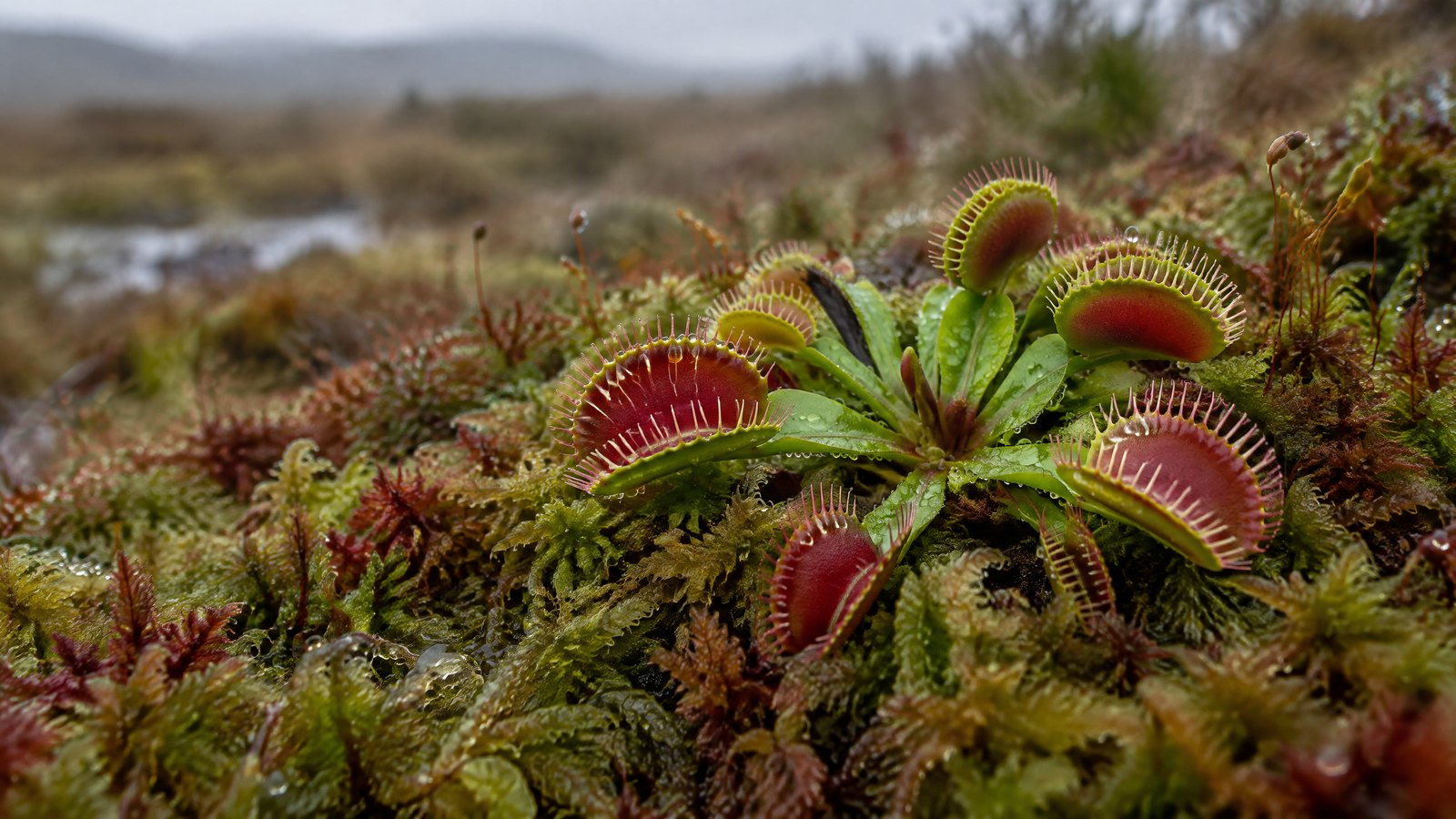
The Venus flytrap (Dionaea muscipula) is monotypic—the only species in its genus—and arguably the most famous plant in the natural world. Originating exclusively from a tiny coastal radius within 100 miles of Wilmington, North Carolina, it has captivated naturalists since Charles Darwin famously proclaimed it "one of the most wonderful plants in the world."
The trap consists of a bivalved modified leaf blade fringed with comb-like marginal teeth (cilia). On the interior surface of each lobe sit three sensitive trigger hairs. When an insect brushes two hairs within 20 seconds, electrical action potentials alter motor cell turgor within 100 milliseconds, snapping the lobes shut. Continued movement stimulates digestive enzyme release, dissolving insect soft tissues over 5 to 10 days before reopening as a clean, mineral-recharged trap.
In Ireland, the greatest hurdle to growing Dionaea is the myth that it is an indoor tropical houseplant. When kept on a dim living room shelf in winter, it starves from insufficient light while central heating prevents its natural winter dormancy, leading to fungal rot and death. Grown outdoors on a sunny Irish patio or in an unheated porch, it is remarkably vigorous and long-lived.
Choosing an Irish Growing Position
A flytrap benefits most from a position with genuinely strong light, a stable pot and a dependable low-mineral water source. A sheltered outdoor position can provide excellent light in the growing season, but “outdoors” is not a single condition: a sunny patio, exposed balcony and waterlogged garden bed create very different risks. Check how much direct sun reaches the plant, whether wind can dry or overturn the pot, and how the container behaves during hard frost.
For indoor cultivation, a bright ordinary windowsill can be less intense than it appears, particularly through an Irish winter. If new leaves are long, pale or weak, improve light before increasing feeding. Outdoors or indoors, do not use ordinary potting compost or conventional fertiliser. A low-nutrient, acidic carnivorous-plant medium and rainwater or another suitable low-mineral water source allow the roots to work as intended.
What healthy seasonal change looks like
A trap is a leaf with a limited working life. It may blacken after closing and digesting, or simply after ageing. Remove it only when fully black and dry; judge the plant by its growing point and whether new leaves are appearing. A winter slowdown is different from a soft, rotting crown. During a cool rest, reduce feeding and keep the medium only lightly moist while protecting the pot from prolonged deep freezes. Exact dormancy routines differ with the plant’s indoor or outdoor regime, so favour observation over a forced calendar method. The International Carnivorous Plant Society and NYBG both frame high light, pure water and condition-led care as more important than dramatic trap-feeding routines. ICPS growing guide NYBG care guide
A simple weekly check
Once a week, look at the newest leaves, the water level and the pot’s stability rather than trying to make every trap perform. Note whether new traps are stronger, weaker or unchanged. If something is wrong, correct the most likely foundation issue first—usually light, water or medium—and then allow several weeks for a response. Keep a short note of major changes such as moving the pot, switching water source or repotting; this makes seasonal care much easier to understand next year.
Related Irish growing guides
- Can Venus Flytraps Live Outside in Ireland? — Plan a sheltered outdoor position and winter protection.
- Venus Flytrap Dormancy in Ireland — Learn to distinguish a slow winter rest from an unhealthy plant.
- How to Repot a Venus Flytrap — Refresh growing medium when the plant’s condition calls for it.
Cultivating Venus Flytraps in the Irish Climate
- Outdoor Summer Power: From April to September, place your pots in the sunniest outdoor position available—ideally south-facing, sheltered from strong Atlantic gales. Outdoor plants develop deep crimson anthocyanin trap pigmentation, short robust leaves, and catch abundant natural prey including bluebottles, wasps, and spiders.
- Substrate Requirements: Use a strict 50:50 mixture of pure, unfertilised sphagnum moss peat and horticultural perlite (or coarse quartz silica sand). Avoid ordinary potting compost and mixes with added fertiliser. Use a low-nutrient, acidic flytrap medium, and assess a peat-free product by its documented ingredients and suitability rather than its label alone.
- The Tray Watering System: From late spring through late summer, stand the pot in a saucer filled with 1–2 cm of clean rainwater or reverse osmosis water. Never allow the pot to dry out completely during summer.
- Navigating the Irish Winter: In late October, as day lengths shrink and temperatures fall, remove the standing water tray. The traps will naturally turn black and die back to a compact white underground rhizome. Keep the substrate cool (2°C to 8°C) and barely damp in an unheated porch, cold greenhouse, or sheltered outdoor corner until spring.
Research & sources
These references support the practical and conservation notes on this page.
- International Carnivorous Plant Society — Growing Dionaea muscipula: Light, pure water, feeding, outdoor culture and repotting guidance.
- New York Botanical Garden — Venus Flytrap Houseplants: Low-mineral water, black traps, feeding and repotting guidance.
- Royal Horticultural Society — How to grow carnivorous plants: Specialist compost, water and dormancy guidance across several carnivorous plant groups.
Common mistakes to avoid
- Watering with hard Irish tap water laden with dissolved limestone (calcium carbonate).
- Keeping the plant in a permanently warm room during winter, preventing vital cold dormancy.
- Growing indoors behind UV-filtering window glass instead of outdoors in full sun.
- Feeding human food, bacon, cheese, or raw hamburger meat into traps.
- Chronically poking trigger hairs to watch them snap empty, wasting metabolic energy.