North American Pitcher Plants
Sarracenia Species & Hybrids
Tough, architectural bog juggernauts that thrive effortlessly in outdoor Irish gardens.
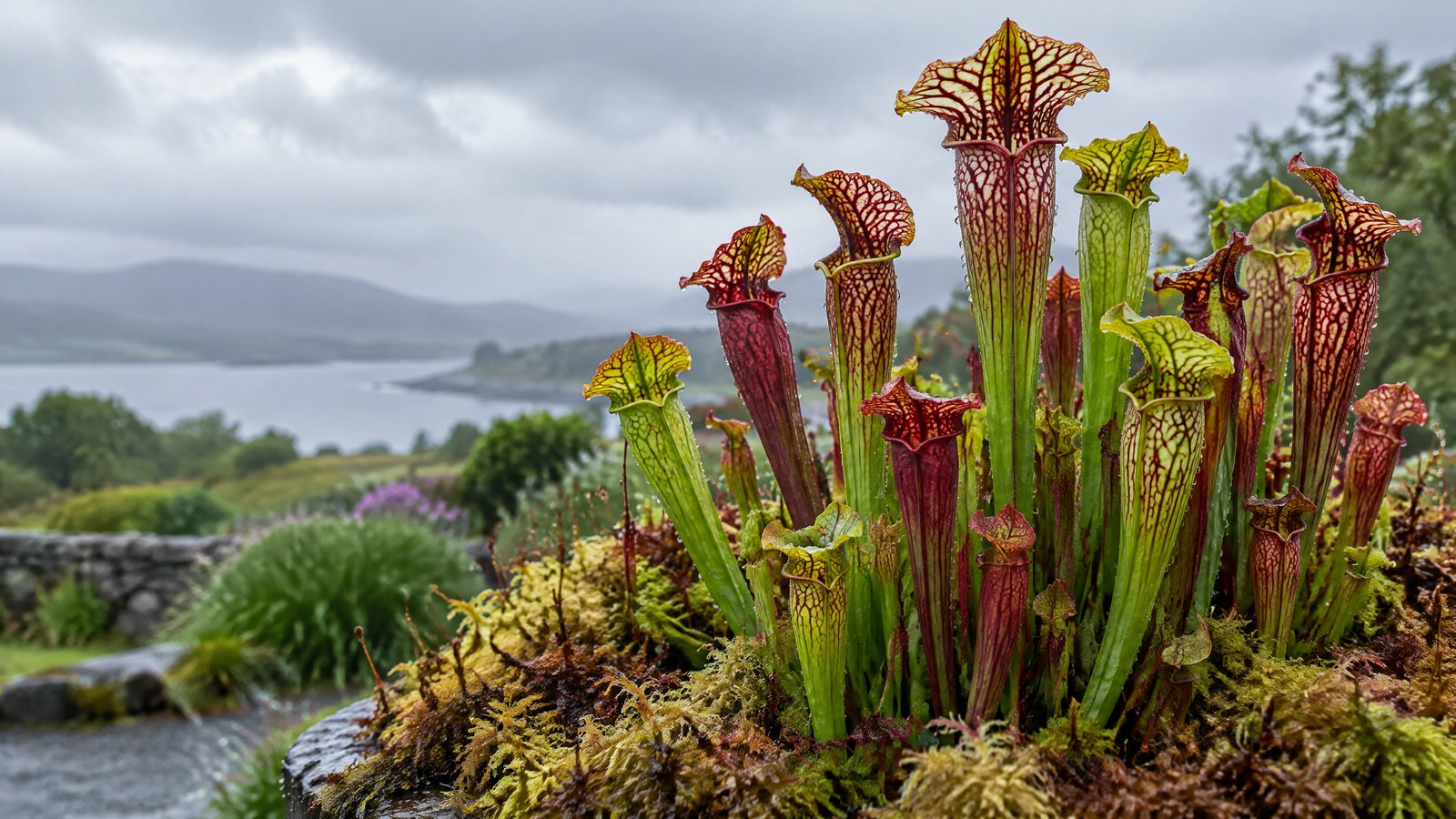
Sarracenia—commonly known as trumpet pitcher plants—are among the most architectural and dramatic perennials in cultivation. Native to the damp, sun-drenched bogs of eastern North America, they range from the squat, tubby, water-filled rosettes of Sarracenia purpurea to the towering, metre-tall fluted columns of Sarracenia flava and Sarracenia leucophylla.
Unlike Venus flytraps, Sarracenia operate via passive pitfall traps. Insects are lured to the pitcher rims by sweet, intoxicating nectar and visual cues. As prey treads upon the slippery, waxy peristome, they lose their footing and plunge down the tube. Downward-pointing internal hairs prevent upward escape, while a bath of digestive enzymes and symbiotic bacteria digests the prey at the base.
For Irish gardeners, Sarracenia can be rewarding outdoor container plants when kept in contained patio pots or mini-bogs. However, Sarracenia purpurea is listed in Ireland’s National Invasive Species Database as a Medium Risk Invasive Species (2013 Report). Never release or plant pitcher plants in natural bogs, wetlands, or anywhere in the wild. Keep cultivated plants contained and prevent them from escaping into the environment. Read the National Biodiversity Data Centre record.
Contained cultivation is part of responsible care
North American pitcher plants can be satisfying Irish container plants, but they belong in a managed pot, patio bog or other contained planting—not in a natural bog, wetland or unmanaged damp ground. Sarracenia purpurea is a North American species introduced to Ireland. The National Biodiversity Data Centre lists it as a Medium Risk Invasive Species in its 2013 report. Naturalised populations are not a reason to create new ones.
Choose a large stable container with specialist low-nutrient carnivorous-plant medium and a reliable source of rainwater or other low-mineral water. Full sun is important for robust pitchers. Water needs vary by season: keep the growing medium consistently damp in active growth, while maintaining drainage in a wet winter so a small pot is not simply left stagnant. Tall forms may need shelter from damaging wind. Even hardy material deserves attention during unusually severe cold spells.
A restrained approach to feeding and pruning
Pitchers are designed to catch prey; routine fertiliser is not needed in the medium. Allow green parts of a pitcher to keep working and remove only dead, brown material. In spring, observe the new growth and refresh the medium only when it has degraded or the plant has outgrown the container. For general cultivation detail, consult the International Carnivorous Plant Society guide and the National Biodiversity Data Centre record.
Seasonal container checklist
In spring, look for new growth and make sure the pot has not become crowded. In summer, check that the tray or bog container has an adequate supply of low-mineral water during dry or windy spells. In autumn, remove only clearly dead foliage and inspect the container for storm damage. In winter, keep the medium damp rather than allowing a small pot to remain deeply submerged for months. This schedule is deliberately conditional: adjust it for your plant’s size, weather exposure and container design.
Related Irish growing guides
- Sarracenia in Ireland — Read the detailed container-care and responsible containment guidance.
- Water for Carnivorous Plants — Prepare low-mineral water before setting up a patio bog.
- Where to Buy Carnivorous Plants in Ireland — Check current live-plant delivery terms before ordering.
The Ultimate Outdoor Carnivore for Ireland
Sarracenia perform best when grown outdoors year-round in large containers or dedicated patio mini-bogs.
- Wind and Weather Hardiness: While tall species like S. leucophylla appreciate shelter from coastal gale-force gusts, the northern subspecies S. purpurea subsp. purpurea is virtually indestructible. It withstands driving rain, heavy winter frosts, snow, and summer squalls without flinching.
- The Mini-Bog Advantage: Planting multiple Sarracenia species together in an undrilled whiskey barrel or large plastic trough lined with 50:50 peat and perlite creates a self-sustaining wetland display. In summer, the bog should be waterlogged; in winter, overflow holes ensure excess rainfall drains away so the rhizomes are moist rather than submerged.
- Spring Flowering: In late April and May, mature Sarracenia produce astonishing, nodding, alien-like blossoms on long scapes before the main flush of summer pitchers emerges.
- Winter Care: In November, the upright pitchers will gradually brown off as frost arrives. Trim off dead, brown foliage in late February to allow early spring sunshine to warm the growing points on the rhizome.
Research & sources
These references support the practical and conservation notes on this page.
- National Biodiversity Data Centre, Ireland — Pitcherplant (Sarracenia purpurea) species record: Ireland’s Medium Risk Invasive Species designation in the 2013 report.
- Irish Peatland Conservation Council — Carnivorous Plants: Killers in the Bog: Introduced pitcher plants and Irish bog ecology.
- International Carnivorous Plant Society — Growing Sarracenia: Container, water and winter care guidance.
- Royal Horticultural Society — How to grow carnivorous plants: Specialist compost, water and dormancy guidance across several carnivorous plant groups.
Common mistakes to avoid
- Growing them indoors on a dimly lit windowsill where pitchers grow pale, floppy, and fail to open.
- Pouring tap water into the upright trumpets of S. flava or S. leucophylla (which produce their own fluid).
- Using shallow, tiny pots that easily blow over in Irish winds and freeze solid in winter.
- Discarding pitchers while the lower halves are still green and actively photosynthesising.