Sarracenia in Ireland: Why Pitcher Plants Are Perfect for Our Climate
North American pitcher plants are among the tough, glorious aristocrats of the carnivorous world. Here is why Sarracenia often out-perform all other carnivores in an Irish garden.
By Bog & Bite · Published 25 September 2026
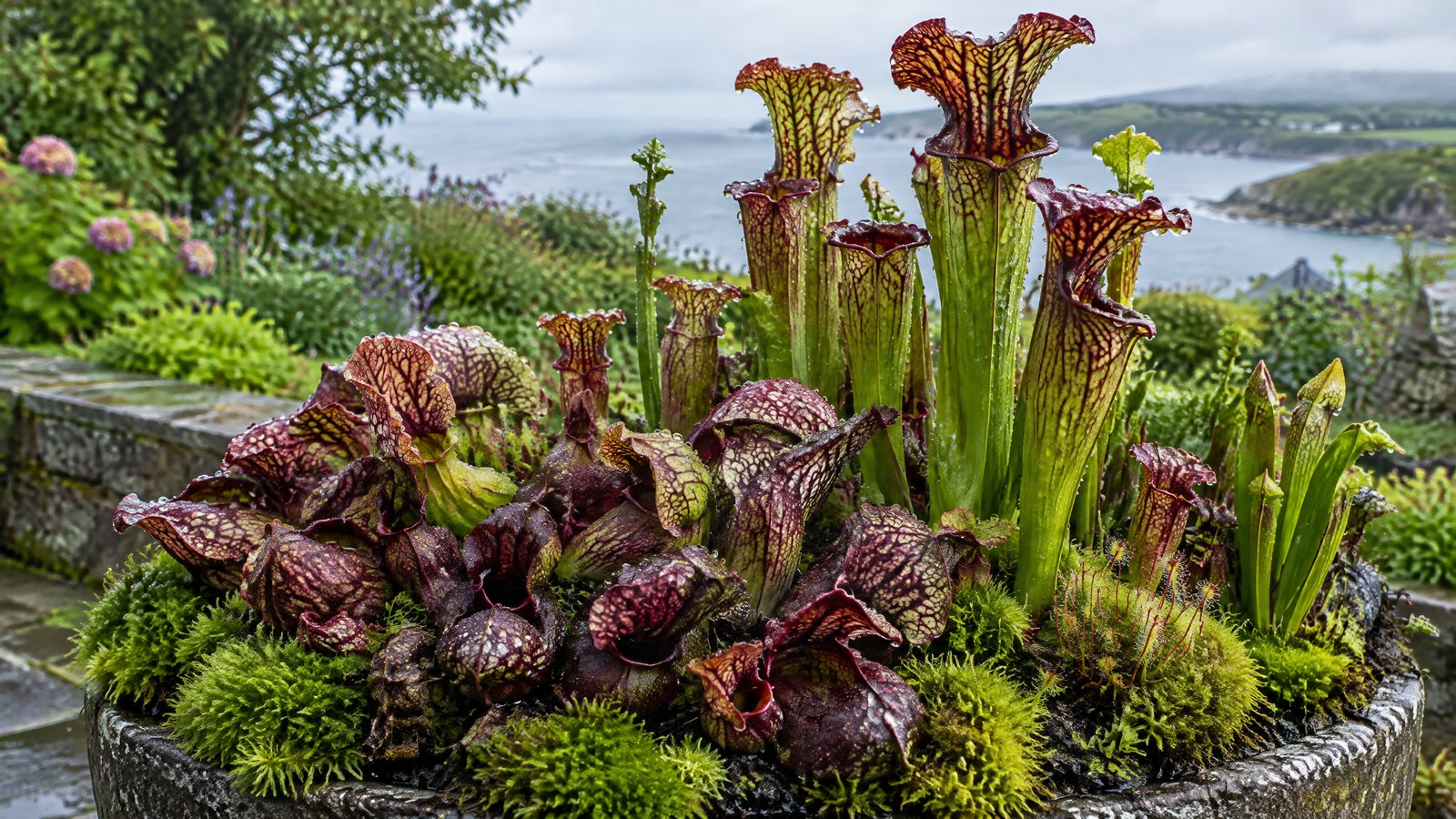
If you ask an experienced Irish carnivorous plant specialist which genus delivers the greatest visual drama, easiest outdoor maintenance, and most spectacular resilience in our damp, temperate climate, the answer is rarely the Venus flytrap.
It is Sarracenia—the North American trumpet pitcher plant.
With tall, architectural tubes rising up to a metre in height, adorned in intricate networks of blood-red veins, chartreuse flares, and brilliant white fenestrations, Sarracenia are genuine showstoppers. Better still, the northern species evolved in glacial bogs from New Jersey up through Ontario and Newfoundland, meaning they are biologically pre-adapted to the cool, rain-drenched conditions of an Irish summer and the chilly frosts of our winter.
In fact, Sarracenia purpurea was introduced to the raised peat bogs of Central Ireland (most notably in Roscommon and Westmeath) in the early 20th century, where naturalised colonies have thrived untouched for over one hundred years—evidence that the species can establish in some Irish wetland conditions; this is also why cultivated plants must never be introduced to natural sites.
Selecting the Best Sarracenia for Ireland
While all Sarracenia are temperate, different species have distinct temperature tolerances and seasonal peaks:
1. Sarracenia purpurea subsp. purpurea (Northern Purple Pitcher)
- Habit: Low-growing, squat, fat rosettes of purple-veined pitchers that stay green and purple throughout winter.
- Hardiness: Fully hardy to -15°C. Impervious to Irish rain, snow, and gale-force coastal winds.
- Irish Verdict: The single easiest carnivorous plant to grow outdoors anywhere on the island of Ireland.
2. Sarracenia flava (Yellow Pitcher Plant)
- Habit: Spectacular, upright trumpets up to 80 cm tall with sweeping umbrellas and striking red throat markings.
- Peak Season: Early summer (May–July). It produces huge, fragrant, daffodil-yellow nodding flowers in late April before the pitchers emerge.
- Irish Verdict: Superb in full sun; handles outdoor Irish winters easily.
3. Sarracenia leucophylla (White-Topped Pitcher Plant)
- Habit: Exquisite, ruffled white hoods laced with dark crimson veining.
- Peak Season: Late summer and autumn (August–October).
- Irish Verdict: In Ireland’s cooler summers, S. leucophylla takes longer to get going than S. flava. It produces its most breathtaking autumn pitchers in an unheated greenhouse, conservatory, or warm sheltered courtyard.
4. Hardy Garden Hybrids
Vigorous commercial hybrids—such as S. × catesbaei (S. flava × S. purpurea) and S. 'Juthatip Soper'—combine the cold-hardiness and squat stability of purpurea with the height and vivid coloration of the tall trumpet species, making them phenomenal candidates for Irish patio displays.
Designing an Outdoor Irish Sarracenia Bog
Sarracenia reach their absolute peak when grown outdoors in a dedicated mini-bog container. A large volume of soil buffers against summer temperature spikes, prevents wind toppling, and keeps moisture levels stable.
Building a Mini-Bog in 5 Steps:
- The Container: Select a wide, undrilled container (a halved whiskey barrel lined with pond liner, an old ceramic Belfast sink with the plug sealed, or a heavy frost-proof plastic planter with a diameter of 40–60 cm).
- Overflow Drainage: Drill two or three 1 cm overflow holes into the side of the container, approximately 4–5 cm below the top rim. This allows excess winter rainwater to drain freely, preventing the crowns from becoming completely submerged during Atlantic storms.
- The Substrate: Fill the container with a pre-moistened 50/50 mix of pure, unfertilised sphagnum moss peat and horticultural perlite (or coarse silica sand).
- Planting: Position your Sarracenia rhizomes with their roots spreading deep into the damp peat, keeping the growing point (the top half of the woody rhizome) sitting flush with the soil surface, exposed to the sun.
- Top Dressing: Layer the surface with live Sphagnum moss. Over the season, the live moss will form a lush, emerald-green carpet that shades the roots and suppresses weeds.
Seasonal Maintenance Checklist
- Spring (March–April): Prune away old, brown pitchers that collapsed over the winter using clean shears. This opens the crown to spring sunshine and stimulates flowering. Top up the tray with rainwater.
- Summer (May–August): Maintain 2–5 cm of standing rainwater in the tray or keep the mini-bog saturated. Ensure the plants receive the absolute maximum hours of direct, unfiltered sunlight available.
- Autumn (September–October): Pitchers will become stuffed with wasps, bluebottles, and hoverflies. The bases of the tubes will bulge and turn brown as digestion occurs; do not cut them down while the upper halves are still green and photosynthesising!
- Winter (November–February): The plants enter dormancy. Tall trumpets will brown off gradually. Let them rest in the cold. Only trim pitchers once they are dry and brown.
Grow in containers; never introduce them to wild sites
Sarracenia purpurea can grow well in Irish conditions, but that is not a reason to introduce it to a bog, wetland or any unmanaged natural area. It is a North American species. The National Biodiversity Data Centre lists it as a Medium Risk Invasive Species in its 2013 report, and Irish peatland guidance warns against planting non-native carnivorous plants in wild boglands. Keep cultivated plants in contained pots or designed patio mini-bogs and prevent material from escaping.
For a garden container, focus on sun, low-mineral water, a low-nutrient specialist medium and sufficient space for roots. Tall species may need shelter from strong wind; even hardy plants benefit from attention during unusually severe cold. Do not treat the presence of naturalised populations as proof that a new introduction is harmless. National Biodiversity Data Centre record Irish Peatland Conservation Council
Continue learning
- Where to Buy Carnivorous Plants in Ireland — Ask nursery and delivery questions before ordering live plants.
- Rainwater for Carnivorous Plants — Set up suitable low-mineral water for container growing.
- Best Carnivorous Plants for Beginners — Compare temperate bog plants with indoor tropical choices.
Research & sources
These references support the practical and conservation notes on this page.
- National Biodiversity Data Centre, Ireland — Pitcherplant (Sarracenia purpurea) species record: Ireland’s Medium Risk Invasive Species designation in the 2013 report.
- Irish Peatland Conservation Council — Carnivorous Plants: Killers in the Bog: Irish bog ecology, introduced pitcher plants and native carnivorous flora.
- International Carnivorous Plant Society — Growing Sarracenia: Sun, water, winter and container-care guidance.
- Royal Horticultural Society — How to grow carnivorous plants: Outdoor container culture and cold-spell protection.
Frequently Asked Questions
Can all Sarracenia species survive an Irish winter outdoors?
Sarracenia purpurea subsp. purpurea and Sarracenia flava are exceptionally cold-hardy and thrive outside year-round anywhere in Ireland. Southern species like Sarracenia minor or Sarracenia psittacina appreciate protection in an unheated greenhouse or porch during severe frosts.
Do I need to put water inside Sarracenia pitchers?
Only in Sarracenia purpurea, whose open, tubby hoods catch rainwater naturally. All upright trumpet species (like S. flava, S. leucophylla, and hybrids) have fixed hoods over the pitcher opening to keep rain out and produce their own digestive fluid. Never fill upright trumpets with tap water!
When is the best time to divide a large Sarracenia clump in Ireland?
Late winter to early spring (late February through March), just as the plant emerges from dormancy but before spring flower buds or new pitchers begin actively extending.